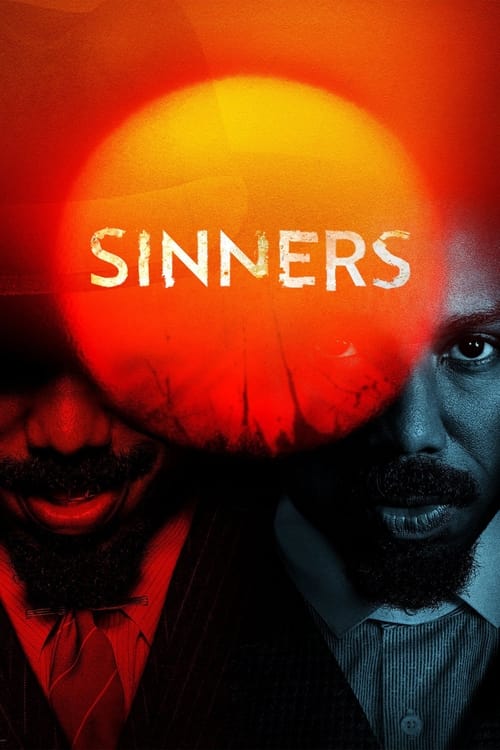
Soul for Sale: The Films and Obsessions That Built Ryan Coogler's Sinners
Ryan Coogler
Ryan Coogler's uncle James only talked about Mississippi when the blues was playing. He'd sit there, music on, and the words would come — about a place he'd left, a world he'd survived, a culture that had quietly shaped everything. When James died, Coogler didn't just grieve a man. He started building a film.
That's where Sinners begins — not with vampires, not with 1932 Mississippi, but with a nephew listening. The juke joint, the crossroads myth, the 65mm grandeur: all of it is a monument to one man who never appears on screen. Understanding that makes everything else snap into focus. Because Sinners isn't really a vampire movie. It's a séance — and Coogler borrowed tools from some very specific places to conduct it.
Here are the films that made it possible.
The Book That Gave Him a Blueprint
Coogler has called Salem's Lot "a massive influence" — and what he took from Stephen King isn't the vampires, it's the town. King's novel isn't about Barlow; it's about what makes a community vulnerable enough to invite evil in. Economic desperation. Wounded pride. Suppressed resentments. The monster just upgrades what's already there.
Coogler maps that logic onto Jim Crow Mississippi with devastating precision. Remmick doesn't conquer the juke joint — he gets invited in. And in Sinners, the invitation comes through the same human cracks King identified: yearning, grief, the need to belong. The genius move is making the pre-existing predatory system — segregation, sharecropping, the extractive economics of the Jim Crow South — Remmick's true predecessor. He doesn't introduce evil. He formalizes it.

If you want to understand the architecture of Sinners, spend a night with King's novel first. The vampire is almost beside the point.
The Episode He's Been Replaying His Whole Life
Most people don't know which Twilight Zone episode Coogler loves most. It's not one of the famous ones. It's "The Last Rites of Jeff Myrtlebank" — a small, rural story about a man presumed dead who returns to a suspicious community that can't decide if he's still human. Coogler describes Serling as teaching him "how to hide the knife": the twist shouldn't just flip the plot — it should flip the audience's understanding of themselves.
That's exactly what Sinners does in its final act. The question isn't who survives the vampire siege. It's what the community becomes once evil has passed through it. Survival costs something. The horror is what you're left holding. That's pure Serling — moral compromise as the true monster, genre as delivery system for a blade you don't feel until it's already in.
The episode is worth finding. It'll reframe the last hour of Sinners completely.
The Paranoia Manual
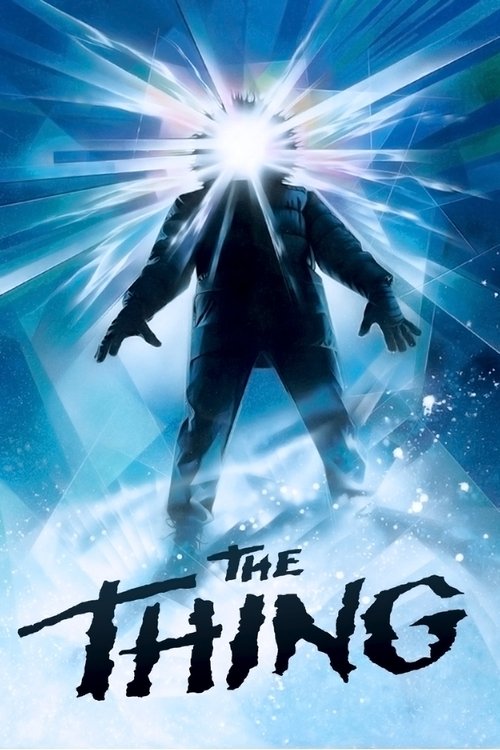
Coogler grew up watching The Thing and calls it his favorite horror film. But the path into Sinners runs through a less obvious entry point: The Faculty, Robert Rodriguez's 1998 high-school riff on Carpenter's creature, which Coogler describes as "quite close" to what he was making — the siege of a familiar communal space, the terror of not knowing who's already turned.
What Carpenter taught him is spatial. Coogler mapped the juke joint like Carpenter maps his Antarctic outpost: every door, every threshold, every sight line. The fortress logic — reinforce, breach, re-fortify — gives Sinners its genre spine. But Coogler goes somewhere Carpenter doesn't: the real question isn't "who's the monster" but "who in this community was already lost before the vampires arrived." The siege makes that visible.
Start with The Thing. It's still the tightest demonstration of how fear of the Other gets weaponized against trust itself.
The Tonal Teachers
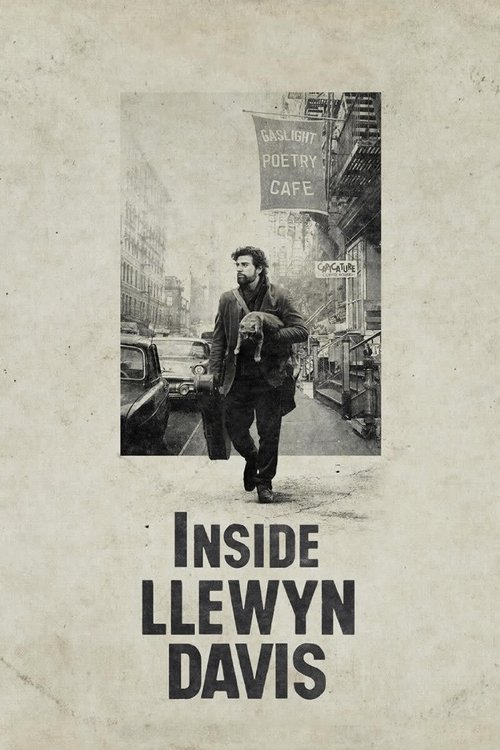
No one toggles between dark comedy and genuine grief quite like the Coens. Coogler explicitly names Inside Llewyn Davis, O Brother Where Art Thou?, Fargo, and No Country for Old Men — and what he's borrowing isn't aesthetics, it's permission. Permission for a film to be absurd and devastating in the same scene. To treat dead-serious violence with a flicker of dark humor, and then immediately punish you for laughing.
Sinners shifts registers so fast it should give you whiplash — blues hangout movie, twin-brothers crime saga, supernatural siege, elegy — and it holds together because Coogler has internalized the Coen lesson: the tonal swings aren't instability, they're the point. Grief doesn't come in one flavor. Neither does Fargo.
Inside Llewyn Davis is the one to watch. It's a film about a musician whose genius nobody around him can quite hear — and its ghost haunts every scene of Sammie picking up his guitar.
The Man Who Sold His Soul Before Robert Johnson Did
Ludwig Göransson came to this score with a specific anxiety — "Who am I to sit down and attempt to compose a blues score?" — and resolved it by going deeper into the lineage than anyone expected. His Swedish father had grown up obsessed with John Lee Hooker records, buying them imported from America before they were welcome back home. That personal thread led Göransson to the story the film is really telling: Black blues records failing to sell in segregated America, traveling to Europe where teenagers like Mick Jagger bought them, only to be re-imported to the U.S. as "rock." The music left as blues and came back as someone else's genre.
Son House was the key figure. A preacher who kept slipping back into the juke joints, oscillating between the sacred and the secular — the same split that defines Sammie. Göransson's discovery: the aggression, the rawness, the distortion we associate with heavy metal was already in House's 1930s performances. Metal isn't the future of blues. It's the grandchild — the inheritance nobody traced back to the source.
That shapes the film's entire sonic architecture. When Sammie plays, the sound narrows to a single guitar. When the vampires take hold, it opens into something orchestral and almost crushing — still blues, different register entirely. And when Sammie's juke joint performance tears open time, the crowd fills with anachronistic figures: a Bootsy Collins-style funk player, a hip-hop dancer, a DJ at a turntable. Göransson wanted to show "what came out of the blues — what was before blues and what was after blues." The sequence collapses a century of Black music into one room on one night.
If you can find a Son House performance, watch it before Sinners. The film will make a different kind of sense.
The Irish Ghost in the Machine
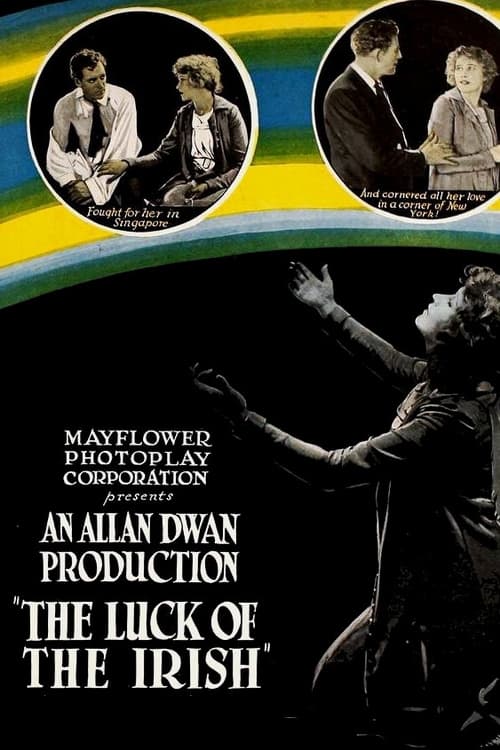
Here's the one nobody was expecting: The Luck of the Irish. Coogler watched it with his family as a kid and came away struck by how Irish folk tradition and Black Southern music felt like they were built from the same grief — colonization, diaspora, the stubborn survival of culture under pressure. That recognition became Remmick.
Making the film's vampire an Irish pre-colonial figure is not a quirk. It's a thesis. Remmick isn't Satan. He's a man carrying his own dispossession, drawn to the beauty of something he's lost — a connection to music, to community, to humanity itself. He understands what the juke joint is better than the surrounding society does. Coogler describes him as "peeling an onion" of backstory, a colonizer who became a vampire who came to America and found a mirror.
That's what makes him genuinely unnerving. Not that he wants to destroy. But that he wants to belong.
The Photographer Nobody Expected
Here's the one that doesn't make the usual press rounds. When Coogler handed cinematographer Autumn Durald Arkapaw her visual references, alongside film stills and paintings, was a photobook: Eudora Welty's Photographs. And an online archive of Farm Security Administration Kodachrome slides — color images of rural American life from the 1930s and 40s, the same era as the film.
Production designer Hannah Beachler, building the sets independently, gravitated toward the same FSA images. What struck her was what you couldn't see in standard black-and-white documentation: "the yellow flowers on the dress… the color of the dirt… the chipped red paint." The specific, saturated reality of Black Southern life, finally visible in color. She built the film's palette from there — a red-white-blue system she and Coogler developed together. The white church, the cotton fields. The blood-red juke joint. Annie's haint-blue house, painted in the Gullah-Geechee tradition to ward off evil spirits.
The large-format decision came later, at a screening where Coogler watched 70mm clips from The Hateful Eight, 2001: A Space Odyssey, and The Dark Knight. He walked up to the screen and said, simply: "This is what I've been missing." The juke joint ended up on the same film stock as Nolan's Batmobile. That's not prestige signaling — it's a political argument. This world deserves this frame.
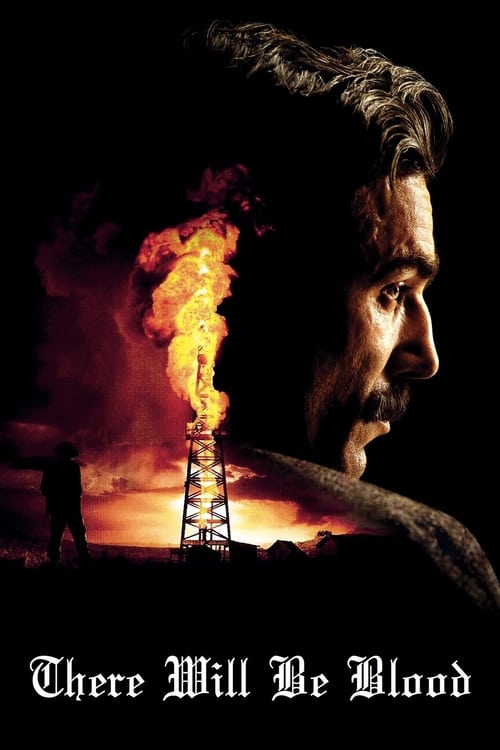
There Will Be Blood was one of Arkapaw's specific references for early-20th-century American landscape. That film knows how to make soil look like it's been waiting for something terrible to happen.
The Shape of the Whole Thing
Pull back and look at the full map and a pattern emerges: Coogler is a director who uses genre as camouflage. King gives him the siege. Carpenter gives him the paranoia. The Coens give him tonal elasticity. Serling gives him the moral blade. Welty and the FSA slides give him the color of the dirt. All of it exists to protect something more personal — a nephew's grief, a musician's erased legacy, an uncle who only talked about Mississippi when the blues was on.
The film's closing coda makes this explicit in the most unexpected way. Stack and Mary resurface in 1992 Chicago — Stack in a Coogi sweater, Mary dressed like Paula Abdul's Straight Up era. Costume designer Ruth E. Carter, who pulled Coogi for Showtime at the Apollo hosts in the late '80s, built that sequence as a bridge between the Jim Crow South and the moment Black culture achieved global pop visibility. They survived. But at what cost? Sinners leaves that question open — which is exactly what Serling would have done.
Where to start? Salem's Lot — the 1979 miniseries if you want something to watch. It'll show you the bones of Sinners before the flesh and the music go on. Then go see what Coogler built on top of them.