The Films David Robert Mitchell Reached Past Jurassic Park to Find
David Robert Mitchell
There was a tree outside David Robert Mitchell's bedroom window when he was a kid. When the wind picked up, the branches dragged along the glass. He had seen Poltergeist. He was, in his own words, genuinely scared it was going to break through and consume him.
That's where The End of Oak Street starts. Not in a pitch meeting, not in a Warner Bros. development slate. In a suburban bedroom in the 1980s, with a kid listening to landscaping and thinking about being eaten.
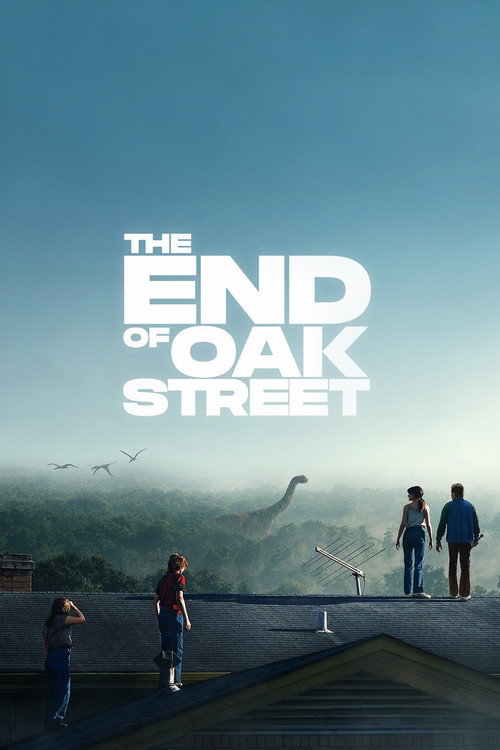
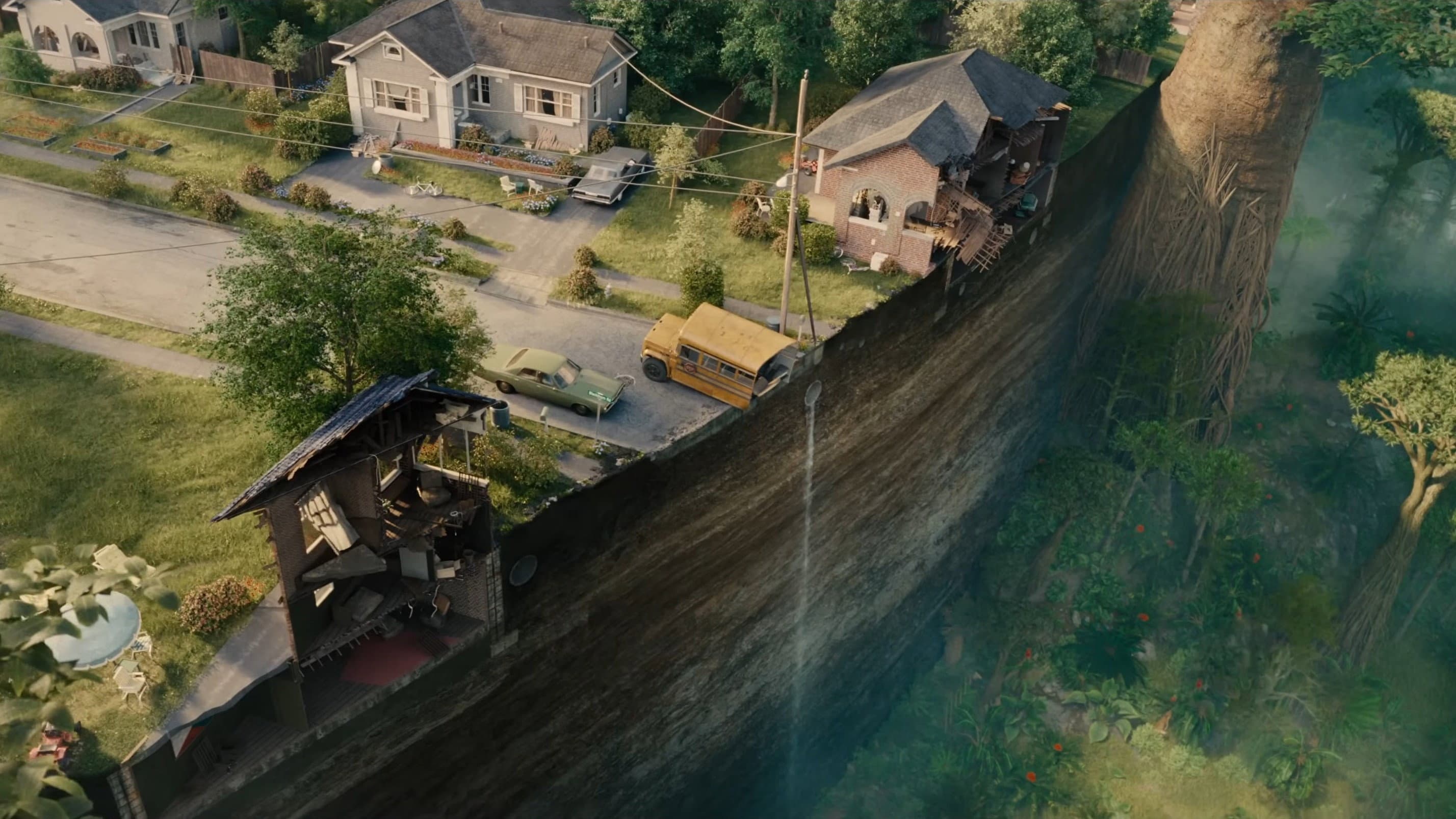
Mitchell's first studio-scale film drops an entire residential street out of its world and into a prehistoric one. Anne Hathaway and Ewan McGregor play parents whose marriage is already coming apart before anything with teeth arrives. The reference list he built it from is not the one you'd guess for a movie with dinosaurs in it: one Spielberg film he watched obsessively and one he steered around, a stop-motion western from 1969 that has quietly fallen off every list, a lens trick he'll happily talk about at length.
The branch on the glass
What Mitchell took is the architecture of its fear: horror arriving through the parts of the house you're supposed to feel safest about. A television, a closet, a window. Hooper's suburb was built on a cemetery, so the ground itself was the betrayal. Mitchell goes bigger and simpler by tearing the whole street out of reality, which makes the neighborhood itself the haunted object.
He also took the tonal contract: Poltergeist is genuinely frightening and never cruel. J.J. Abrams, who produced Oak Street, describes that quality as big-hearted, and says the goal was a people movie with monsters. Hathaway reached for the same film independently when she read the script, calling it scary and wholesome at once, the kind of thing families watch together.
If you've only ever seen the clown and the pool, go back for the tree. It's the sequence where a movie about a haunted house briefly becomes a movie about a kid's bedroom in a storm, and you can feel a young Mitchell in the audience deciding he'd never look at his own window the same way.
The dinosaur movies he watched with his father
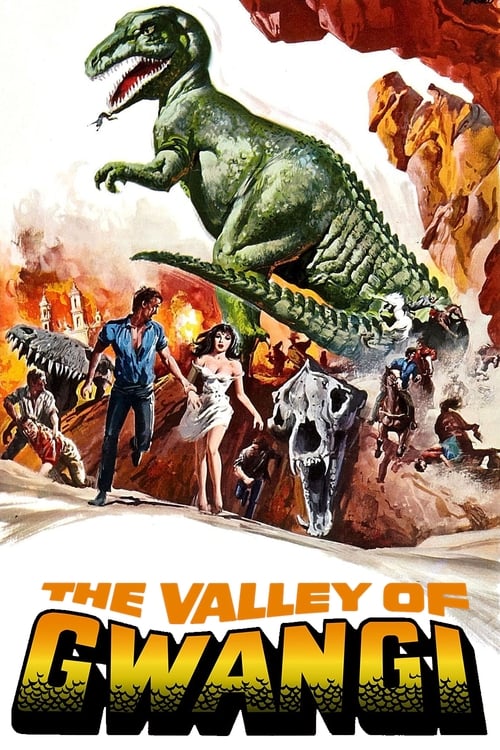
Mitchell grew up on dinosaur films, and he's specific about which ones: he watched all the Ray Harryhausen movies with his dad. King Kong. The Lost World, the silent one from 1925. And The Valley of Gwangi, which is the strange, magnificent one where cowboys ride into a hidden valley and try to lasso an Allosaurus.
That last detail is the whole aesthetic. In Harryhausen's films, a prehistoric animal and an ordinary person occupy the same physical space and have to negotiate it with rope and bodies and bad decisions. No glass, no ticket booth. The creature is weather, and it's also livestock, and it will absolutely kill you. Mitchell's dinosaurs arrive at a suburb the same way, as animals rather than attractions. His raptors come covered in feathers, and none of these creatures are built to be charming.
Watch Gwangi for the roping sequence. Men on horseback against a hand-animated carnivore, every rope tightening in real physical space. It's the sequence that explains why nothing in Oak Street behaves like a theme-park animal, and it's the film to reach for if you want the version of Mitchell's taste that predates everything else.
The movie he had to walk around
Mitchell says the first Jurassic Park is a film he absolutely loves, then immediately adds that his own language of dinosaur movies goes back much further, and that he wanted to do something different. Which is the most useful thing anyone has said about making a dinosaur film in 2026: the landmark is an obstacle before it's ever an influence, and the way past it is to reach behind it.
So look at what he inverted. Jurassic Park is about people who travel to the dinosaurs and enter a controlled environment that fails. Oak Street is about dinosaurs arriving where people already live, in a place nobody engineered. Spielberg gives you a scientist to explain the miracle, plus a fence and a system. Mitchell's family gets none of the three.
No explanation is coming
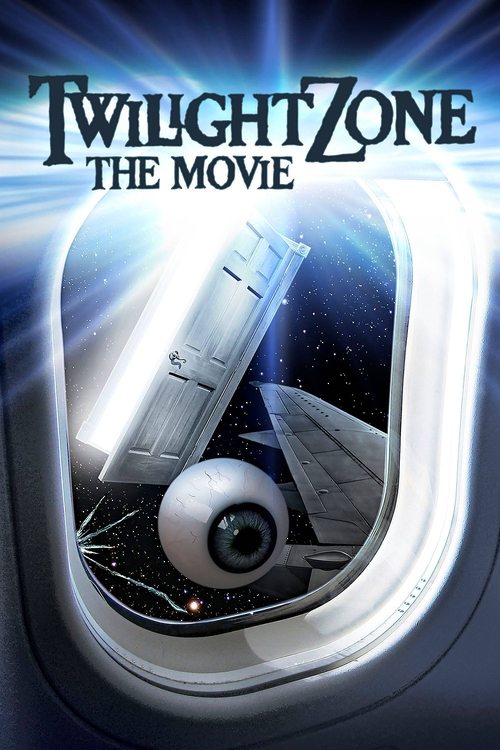
Mitchell cites The Twilight Zone, and what he admires in it is the merging of character with spectacle, the way it moves through drama and terror and suspense and humor without changing gears. Abrams says the script read to him like an amazing episode of the show. You can see why: an impossible premise lands on ordinary people, and nobody arrives with a clipboard to tell them why.
That's the load-bearing choice. No lab accident, no engineered breach, no third-act briefing. The event is a rupture, and the drama is entirely about how four people in one house behave inside it. Serling's series ran on that arrangement, which is why the film can hold a joke and a killing close together without feeling unstable.
If you want a way in, start with "The Monsters Are Due on Maple Street." A suburban street, a strange event overhead, and neighbors who turn on each other before anything with teeth ever shows up. Two streets, two ruptures, decades apart.
He went looking for an alien in his own neighborhood
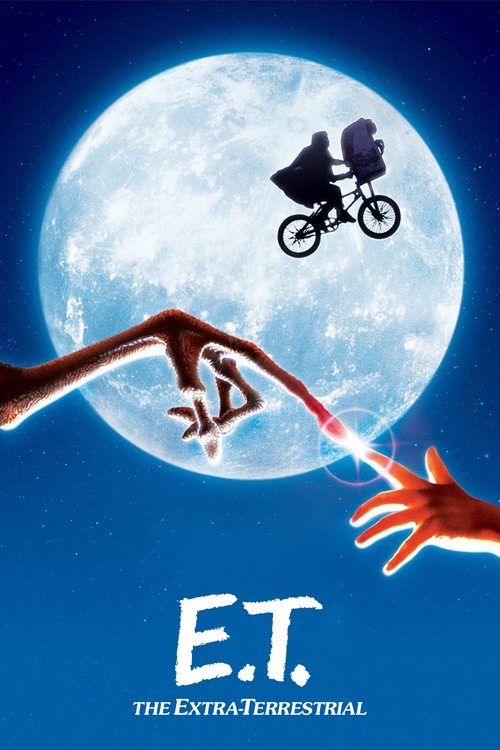
Mitchell saw E.T. many times in the theater. Then he went out and wandered around his neighborhood looking for one.
Nobody makes that up, and it's the cleanest explanation of what he took from Spielberg's 1982 films, which isn't the wonder or the score or the bicycles. It's the conviction, held completely seriously by a child, that the extraordinary thing is one street over and findable on foot. Oak Street is that walk, taken by an adult with a studio budget, and answered.
He took the family structure too. E.T. is a film about a fractured household where the crisis outside runs in parallel with the crisis inside. The Platts arrive pre-broken: Greg has been hiding that he lost his job, Denise's ambitions have stalled, and the marriage is closer to collapse than either admits. The dinosaurs don't cause any of that, they just make it impossible to keep pretending.
Rewatch E.T. for the dusk light on those cul-de-sacs before anything happens. Mitchell had a whole street built. McGregor says walking onto the set felt like stepping into an actual 1980s house, down to what was inside the refrigerator.
One family, one yard, the whole world ending
Signs is on Mitchell's list of core references, and it's the one that tells you about scale.
Shyamalan's trick was to make a global invasion film that never leaves a farm. The aliens stay at the edge of the frame. What you actually watch is a family arguing in a basement. The threat gets smaller and more terrifying the longer it's withheld, and the film ends up being about one man's grief and faith rather than about a species.
Oak Street runs a version of the same compression. A cosmic event has happened to the entire street, and the film keeps its attention on one household, where the creature threat and the domestic one keep intersecting until you can't separate them. Mitchell's stated interest in what sits outside the frame is a Signs instinct: the fear lives in the part of the yard the camera hasn't shown you.
Go back to the baby monitor scene. Nothing is visible. It's still the scariest thing in the film.
The shot that keeps two truths in focus at once
This is the one Mitchell volunteers without being asked. He's a huge De Palma fan, he says, and he loves a split diopter shot.
If you've never had it named for you: a split diopter is a half-lens that holds a face inches from the camera and a figure far down the hallway behind it in perfect focus at the same time, usually with a faint seam where the two focal planes meet. What it does is refuse to tell you where to look. Two things are true at once and the camera won't rank them.
He uses it both ways in Oak Street: for domestic tension, with a face filling the foreground while the rest of the family stays sharp behind, and for dread, with a family calmly loading a car while something plays out in the deep background. He talks about putting real love into camera placement, asking whether we're seeing everything, whether there are things outside this frame. Suspense as a property of the lens rather than the edit.
Start with Blow Out. It's the De Palma film where all of this stops being a flourish and becomes the subject: a sound man who has recorded the truth and can't get anyone to look at it, built out of shots that hold two things in focus and refuse to rank them.
Hathaway's Dorothy
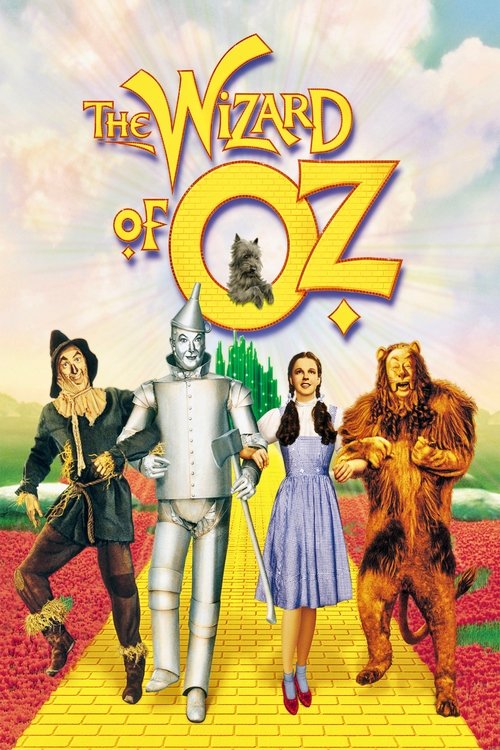
Hathaway built Denise Platt on Dorothy Gale. She wanted her to read as the last person in the world you'd expect to take on a Titanoboa with a knife, and she went to The Wizard of Oz to find the register: an ordinary woman with no special skills, ripped out of her house and dropped into a landscape with different rules.
That's the film's premise restated as a performance choice. The street leaves, the house lands somewhere impossible, and somebody has to walk out into it. Hathaway understood that none of it lands unless her ordinariness is completely convincing first, which is harder acting than the knife.
What the map actually shows
Line these up and the pattern is almost embarrassing in its consistency: nearly every influence on The End of Oak Street is something Mitchell encountered as a child. The window, the Harryhausen tapes with his dad, the neighborhood walk after E.T. He'll tell you the 1980s setting is partly personal expression and partly memory, and the influence map is that sentence with receipts.
The other pattern is scale. Poltergeist, Signs, The Twilight Zone, E.T. are all films that take something enormous and refuse to leave the house. Mitchell keeps reaching for the storytellers who understood that a cul-de-sac is a big enough stage for the end of the world, and then he added dinosaurs to see if it still held.
Start with The Valley of Gwangi. It's the one nobody is going to recommend to you, and it's the only one that explains why the creatures in Oak Street behave like animals with somewhere to be rather than monsters with a cue. Watch the men try to rope the thing. Then watch what a suburban street does when it can't.