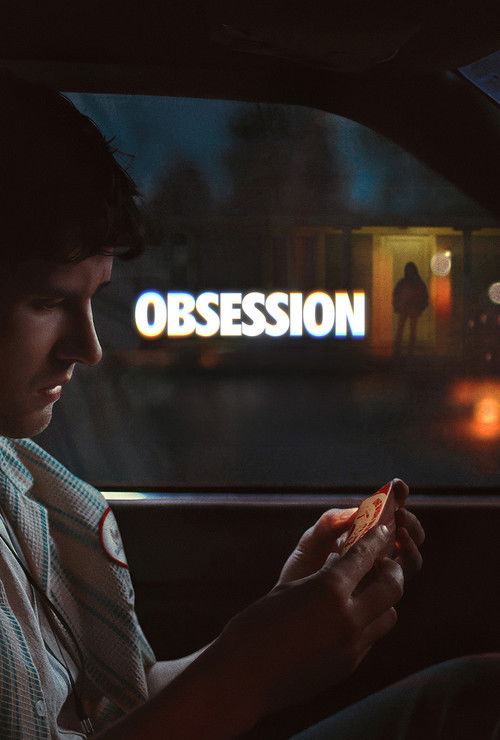
Obsession started with a Simpsons rerun
Curry Barker
The cursed novelty at the center of Obsession is called the One Wish Willow, and it looks like something you'd dig out of the bottom of a thrift-store toy bin. A grinning ceramic tree with little dangling arms, the kind of thing you'd expect to see on a shelf next to a Magic 8 Ball in 1973. Curry Barker had his mother design it. She's a graphic designer. He wanted the curse to feel whimsical and innocent, the kind of object you'd grab off a novelty shelf without thinking twice.
The whole movie started with a Halloween rerun. Treehouse of Horror II, the segment where the Simpsons get hold of a monkey's paw and wish their way into world peace and an alien invasion. Barker had been turning the idea of obsession over for a while and couldn't find his way in. The cartoon cracked it open. "Once I discovered the wish element of it, I realized that was my way in," as he put it.
What follows is a horror film that runs on cartoon physics dressed up in Hereditary's clothes, made by a director who learned his trade alternating between Ari Aster's filmography and Key & Peele. Here's what he carried in.
She wanted to wear his skin
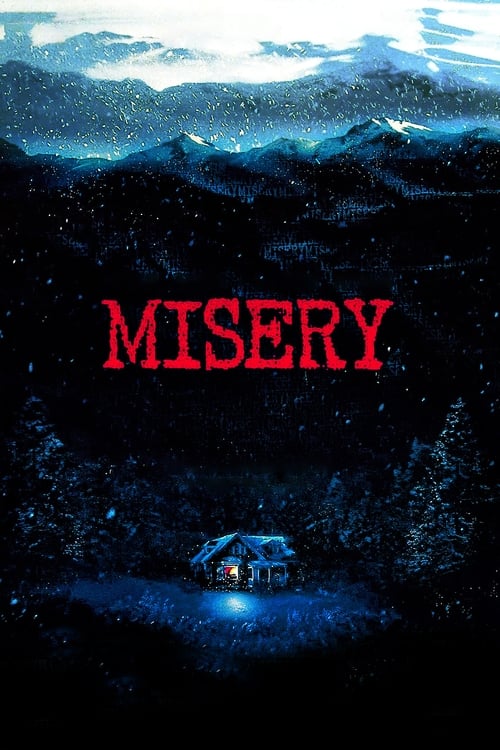
The story DNA is Misery. Barker says so himself, and he gets specific about which part. His "initial in" was the image of Annie Wilkes wanting not just to have Paul Sheldon but to wear his skin, to physically become him. He calls that impulse "kind of serial killer-ish," and he means it as a compliment.
What he did was gender-flip it and shrink it. There's no remote Colorado farmhouse this time. The prison is a duct-taped apartment door and a girlfriend who, thanks to the willow, can no longer disagree with anything Bear says. Where Annie Wilkes hobbled Paul to keep him in place, Obsession settles for a car-door head-smash so brutal Barker had to trim six or seven impacts to dodge an NC-17 rating. The viciousness is straight Reiner. What's new is that it's happening in your friend's one-bedroom apartment, with a girlfriend you've met at parties.
If you've only seen Misery once, watch it again for Kathy Bates's voice in the "cock-a-doodie" scene. That register, childlike on top and lethal underneath, is the entire thesis statement of Obsession.
The movie he made his entire cast watch first
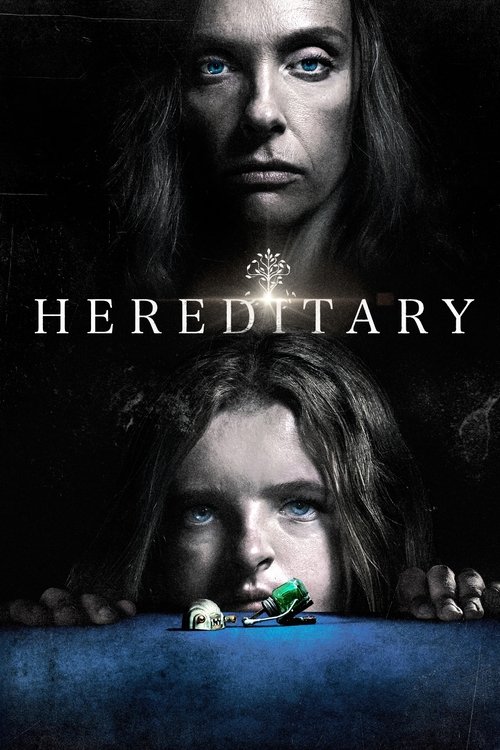
Barker was seventeen when Hereditary came out, and in his words it "shocked his system." Years later, prepping Obsession, he didn't hand his cast a mood board or a Spotify playlist. He sat the whole ensemble down on a couch and made them watch Hereditary together. Same room. Same time. He went on to give a Conservatory talk at AFI about how Hereditary changed his approach to horror.
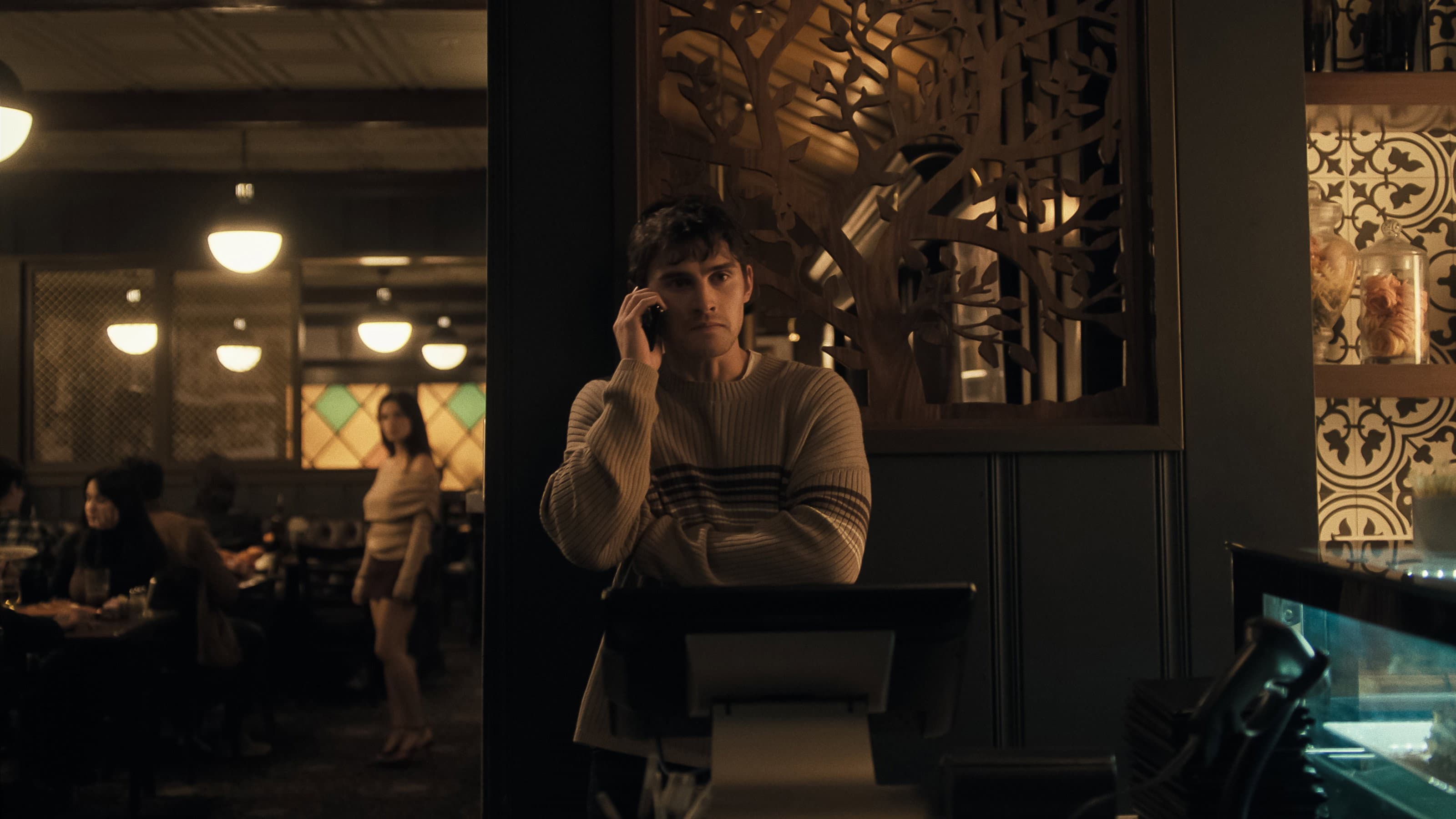
What he took from Aster is harder to point at than to feel. It's domestic geometry. Faces composed in doorways and half-lit corners, the partial-face shadow that withholds the moment you most need it. Dread built from how a living room is framed rather than what's actually in it. Watch any of the shots of Nikki standing motionless in a doorway, smiling. That staging is pure Aster.
For Inde Navarrette specifically, he reached for Midsommar. He showed her selected scenes, not the whole film, because the calibration target was very specific: Florence Pugh's "dry heave crying," which is Barker's own phrase for the grief-vomit scene. Performance that breaks the body before it breaks the character. Navarrette's late-act collapse takes that as gospel.
Don't play possessed. Play whiny.
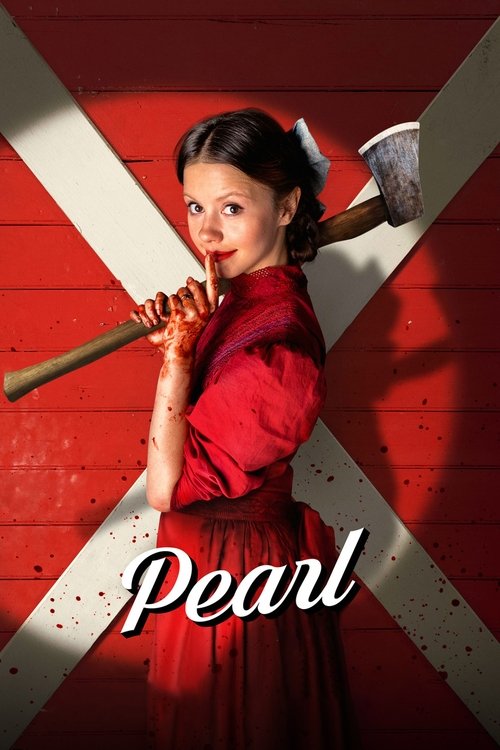
This is the most useful instruction in the entire film, and it came from Pearl. Barker and Navarrette watched Ti West's bonnet-horror prequel together as the performance blueprint, and the rule he gave her was unusual. Nikki was not allowed to play possessed. She had to play a jealous girlfriend who happened to be doing supernatural damage.
The key word, repeated across everything Barker has said about her performance, is whiny. Anger, in his framing, reads as threatening, which is exactly what they didn't want. Whininess reads as manipulative, and manipulation was the whole assignment. Mia Goth's monologue work in Pearl is the register Barker pointed at: childlike, plaintive, never quite stable. There's no Linda Blair anywhere in Obsession's DNA.
You can hear it in Nikki's voice during the scenes where she should be terrifying and instead sounds wounded. The pleading goes up a register. She isn't growling at Bear, she's begging him. That single choice is what makes Obsession feel new, and it's what makes Pearl the smartest rewatch on this list.
The Chainsaw remake everyone else mocks
A24 just hired Barker to write and direct their Texas Chain Saw Massacre reboot, and the most revealing thing about the move is which version of the franchise he actually loves. Most directors would name Tobe Hooper's 1974 original. Barker named the 2003 Marcus Nispel remake, the slick mean one most horror lifers roll their eyes at. He saw it first as a kid, and his stated hope is to "recapture the feeling that I felt as a kid for a modern horror audience."
What he took from that remake is the texture of meanness. Grimy production design (Vivian Gray built Obsession's interior with wood paneling and fake stucco you can almost smell), plus a willingness to actually inflict violence rather than imply it. If the 1974 film is the kind of horror you write essays about, the 2003 film is the kind that hurts you, and Obsession's head-smash sequence belongs squarely to the second tradition.
Worth a rewatch with that lens: the Nispel film's R. Lee Ermey performance is so cruel it borders on slapstick. You can trace the line straight from there to Obsession's house party scenes, where the worst people in the room turn out to be the funniest.
The horror auteur who grew up on sketch comedy
Barker's actual childhood was Key & Peele on a loop. He says so directly. Jordan Peele is his stated idol, the model career path: sketch comic becomes horror auteur, no detour required. Barker even has a small theory of why the pipeline works. Making someone really uncomfortable and making someone laugh, in his words, are almost exactly the same.
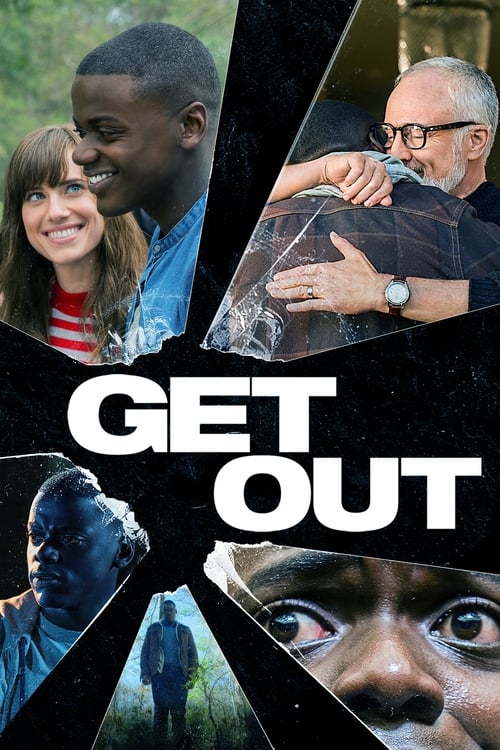
What he took is timing. The cringe-held beat. The willingness to let a scene sit one breath longer than is comfortable so the audience either laughs or screams or, best case, both. The One Wish Willow customer-service hotline scene plays exactly like a Nathan Fielder bit. Polite voice, helpless customer, request for help firmly and bureaucratically denied. In Get Out, the Sunken Place runs the same circuit, just darker. A horror image with a comic mechanism underneath.
If you've never watched the Key & Peele "I Said Bitch" sketch back-to-back with Get Out, try it once. The DNA is identical, and you'll never look at either of them quite the same way again.
Permission to be ugly
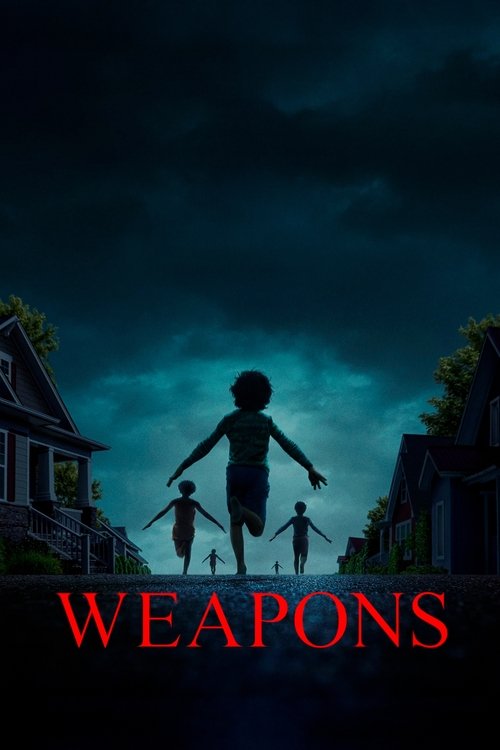
Then there's Zach Cregger, the other contemporary Barker keeps naming. Barbarian. Weapons. The Cregger trick is to treat unexplained evil as flat fact. The horror doesn't stand in for grief or class or trauma. It just exists, the people in the room respond to it like the self-serving idiots they are, and the film mines its comedy out of those responses rather than the evil itself.
Obsession is unmistakably in that tradition. The party scene where a stabbing goes off in front of everyone and the guests' first instinct is to figure out how it affects them personally. The Jenga circle that breaks into a Hansel and Gretel recitation while the room curdles. Ironic needle drops scored over violence. A tonal pivot from sicko laugh to shocking image inside the same minute. Cregger gave Barker permission to be ugly and funny in the same shot, and Barker took it with both hands.
For the cleanest example of the lineage in motion, look at the moment in Weapons when a roomful of entranced children move in perfect unison, and the adults in the scene respond mostly by worrying about their own jobs. Now picture Nikki's whole arc.
The pattern
Step back from the whole map and the shape is a little weird. Most first-time horror directors pull from one neighborhood, whether it's A24 prestige or '80s slasher or J-horror or whatever their YouTube algorithm fed them. Barker pulls from all of them at once, and from sources horror taste-makers tend to look down on, like animated TV and sketch comedy and a 2003 remake.
The combination is the signature. Hereditary's framing, Misery's premise, Pearl's performance, Cregger's tone, Peele's timing, the 2003 Texas Chain Saw's willingness to actually hurt the audience, all of it running on a Treehouse of Horror plot engine. Obsession shouldn't cohere. It does anyway, because Barker treats the high and the low as the exact same material.
If you only watch one thing to understand him, watch Pearl. It's where his single most counterintuitive instinct lives in its purest form: a monster who whines and pleads instead of growling. Once you've seen Mia Goth do it for two hours, the rest of Obsession's map starts to make sense.