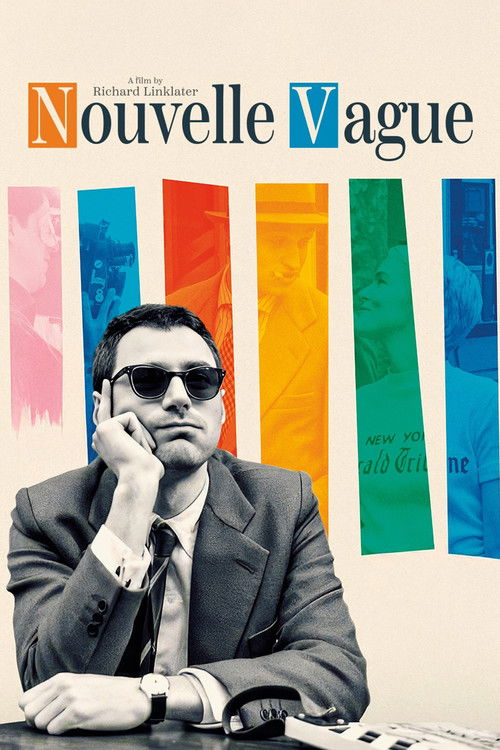
Nouvelle Vague: A Tribute to Cinema's Greatest Rule-Breaker
Richard Linklater
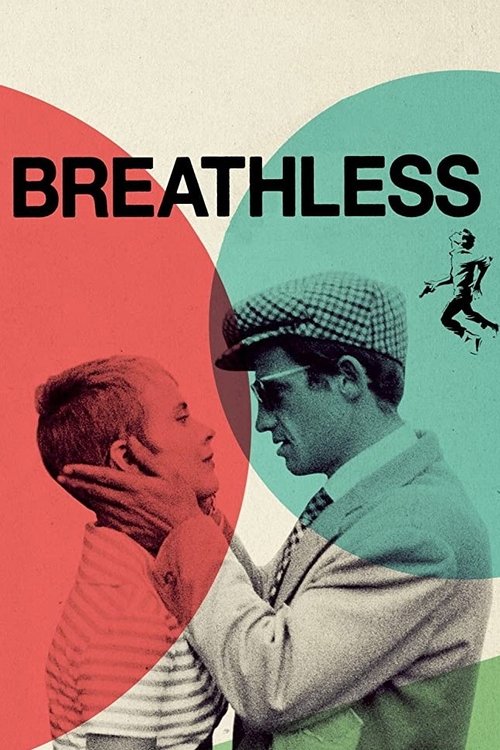
Richard Linklater studied Breathless the way an archaeologist studies a dig site. He learned how many takes Godard used per scene. He tracked which lenses Raoul Coutard selected for every shot. He mapped the day-by-day shooting order. And then he made a film about Breathless that contains zero jump cuts, zero fourth-wall breaks, zero formal disruptions — none of the techniques Godard invented.
That paradox is the key to Nouvelle Vague. But the real surprise is deeper: ask Linklater which French New Wave filmmaker most inspired it, and the answer isn't Jean-Luc Godard. It's a man most cinephiles have never heard of.
The Name You Weren't Expecting
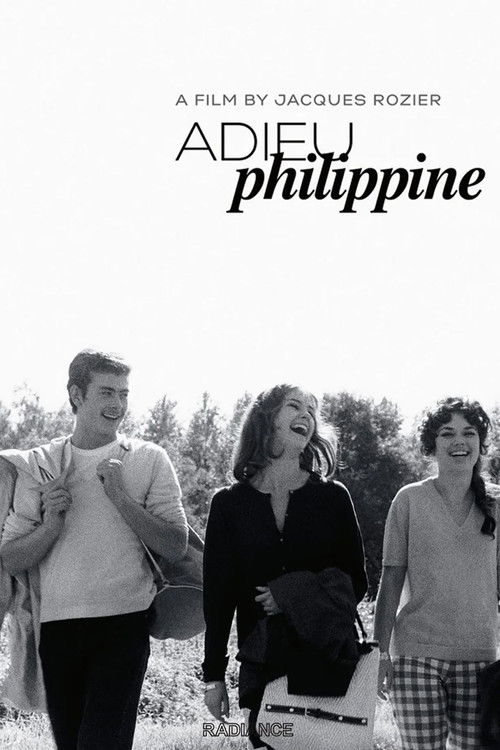
Jacques Rozier made five films in his career. His debut, Adieu Philippine, is one of the most joyous first features ever shot — loose, sun-drenched, electric with the energy of young people figuring themselves out on camera. Linklater calls it "such a great first film" and told Filmmaker that Nouvelle Vague is "like a film made back then, not by Godard but maybe by Jacques Rozier."
That distinction matters enormously. Godard's style is intellectual, confrontational, constantly reminding you that you're watching a movie. Rozier's is warm, communal, delighted by people. Nouvelle Vague is tonally a Rozier film — about Godard. That's how Linklater solved the impossible problem of making a tribute to cinema's greatest provocateur without lapsing into pastiche. He borrowed Rozier's warmth and let it carry Godard's story.
Here's the detail that seals it: Rozier's most famous short works are literally behind-the-scenes films shot during Godard's production of Le Mépris. He was the original fly on the wall of a Godard set. Linklater didn't just admire his tone — he was following his exact methodology.
The Film That Started Everything (and Nothing Like You'd Think)
Breathless is obviously the center of gravity here — it's the film's subject, its visual blueprint, its reason for existing. Linklater recreated key scenes: Belmondo in the phone booth, Seberg on the Champs-Élysées. But he filmed every one from a different angle, showing the crew and the chaos rather than the finished product. As he put it, his respect for Breathless "is even more impressive and more mysterious — how it works is still about Belmondo and Seberg, something Godard conjured."
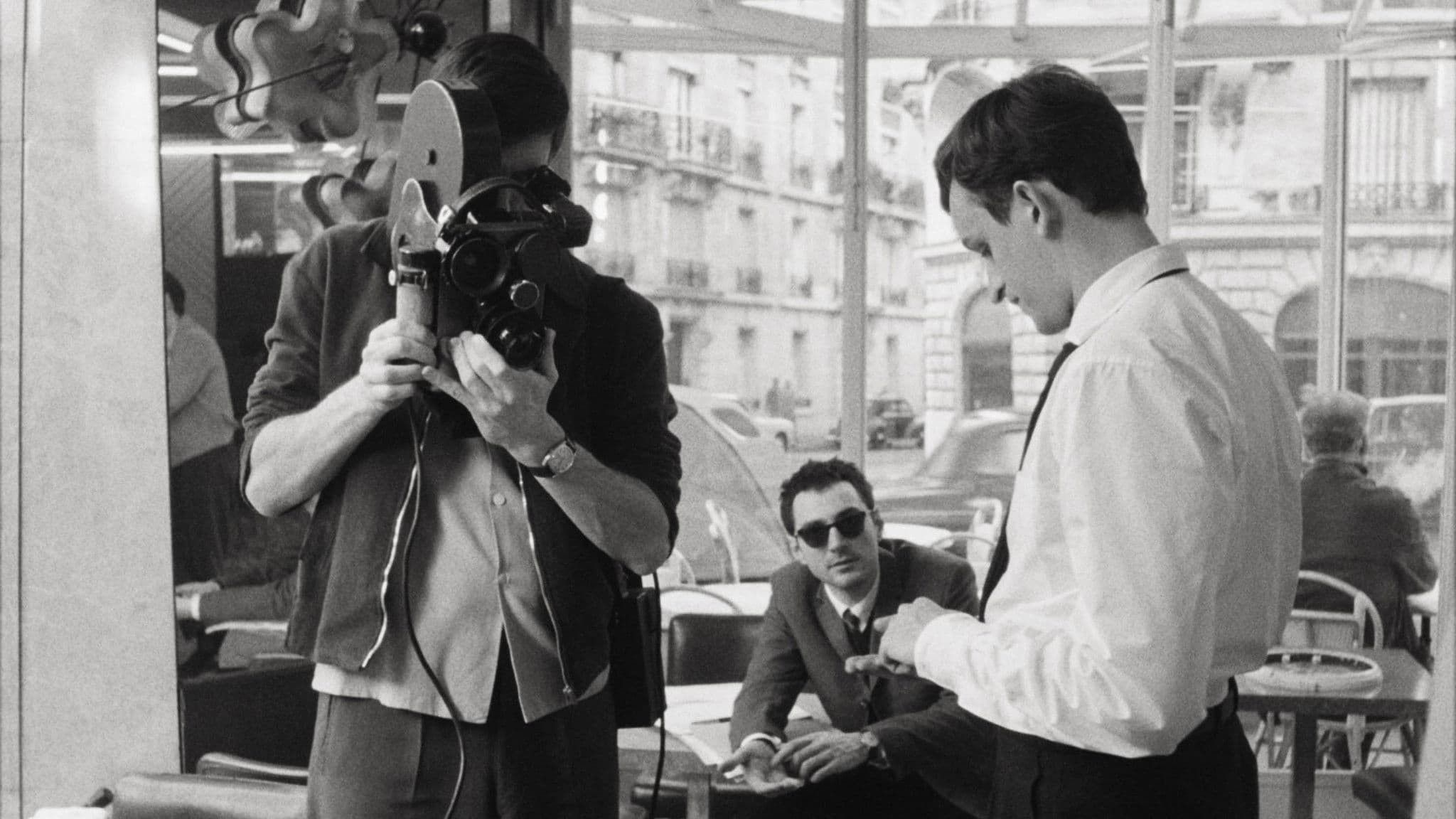
The visual rules were absolute: nothing in the frame that wouldn't fit a New Wave film from 1959 to 1962. Cinematographer David Chambille shot on Kodak 5222 and Ilford HP5 film stocks, through vintage Cooke and Kowa lenses, in the original Academy ratio. They even tracked down the same model of Éclair Cameflex camera Coutard had operated sixty-five years earlier. Chambille said Linklater wanted the film to look "like we have just found it in an attic, in an old box of my grandmother's."
But the real visual source wasn't Godard's movie. It was Raymond Cauchetier's set photographs from the Breathless shoot — candid, behind-the-camera images that showed what 1959 Paris actually looked like during production. These photographs became the film's visual bible, and Cauchetier himself appears as a character, played by Franck Cicurel.
Godard Was a Slacker
The deepest influence on Nouvelle Vague isn't a French film from 1960. It's an American one from 1990 — Linklater's own debut.
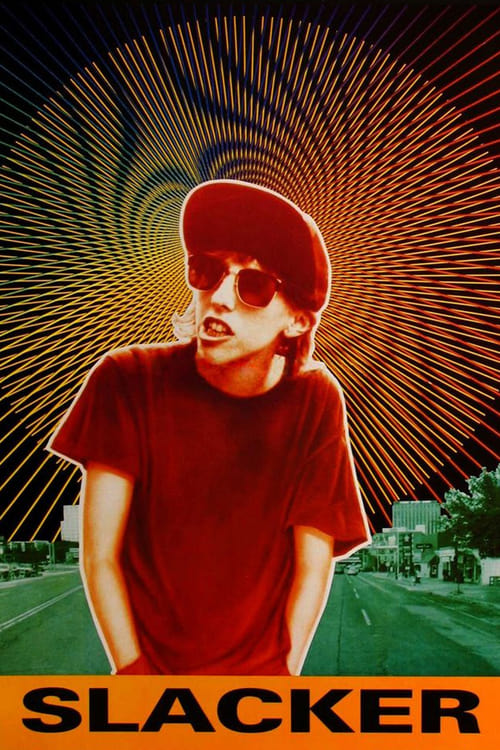
Think about it: a twenty-nine-year-old cinephile with no formal training picks up a camera, ignores every convention about how movies are supposed to work, and makes something that announces a generational shift. That's Slacker. It's also Breathless. One critic called them "structural twins" that "announced the arrival of generational talents at hinge points between decades." Linklater himself said he made Slacker "following the directions set out in Breathless."
So Nouvelle Vague closes a loop. Godard inspires Linklater to pick up a camera in Austin. Thirty-five years later, Linklater makes a film about the moment that started the chain — and realizes the character he most relates to is his younger self. "I made Nouvelle Vague from my 29-year-old perspective," he said. "It's the cinephile making his first film." At the Cannes press conference, he went further: "I felt like I was 28 years old making this film. I had to erase my experience and get back to my first film mentality."
The film's approach — dropping a camera into 1959 Paris and just hanging out with people making a movie — is the quintessential Linklater mode transplanted to another era and language. He didn't make a biopic. He made a hangout movie set on a film set.
The Gandhi Principle
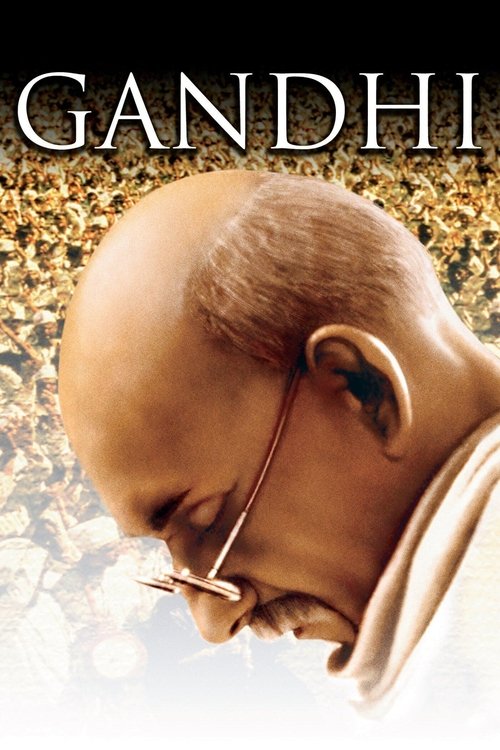
Here's a casting philosophy that traces back forty years: a kid in Texas watches Gandhi without knowing who Ben Kingsley is, and the effect is total immersion. "I was transported," Linklater recalled. "I heard Dustin Hoffman wanted to play Gandhi. And he probably would've been pretty good, but…"
That experience became doctrine. Nouvelle Vague casts entirely against biopic convention — no stars layering icon on icon. Guillaume Marbeck, who plays Godard, had never acted in a film; he was a professional photographer spotted through a YouTube self-tape. Aubry Dullin, as Belmondo, reportedly hadn't seen Breathless before his audition. Belmondo's real-life grandson was reportedly among those who auditioned, but Linklater chose Dullin because he "embodied the spirit" rather than just the resemblance.
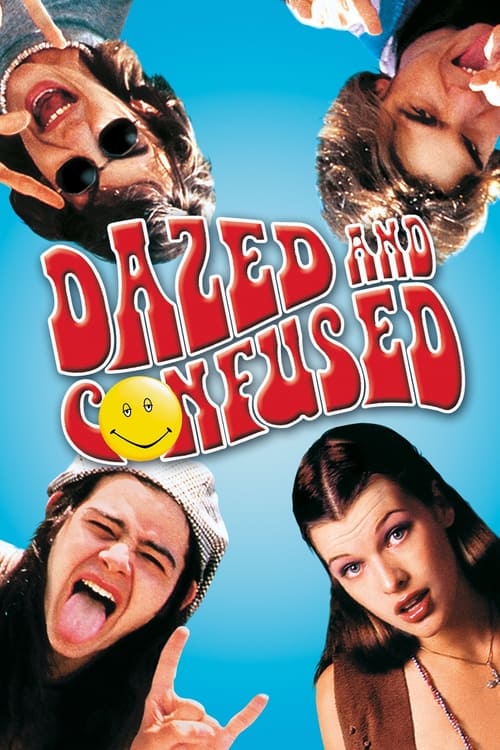
It's the same ensemble-of-unknowns methodology behind Dazed and Confused — and it serves the same purpose. You forget you're watching actors. You believe you're watching people who happen to be making a movie in 1959.
The Four Ages of the Artist
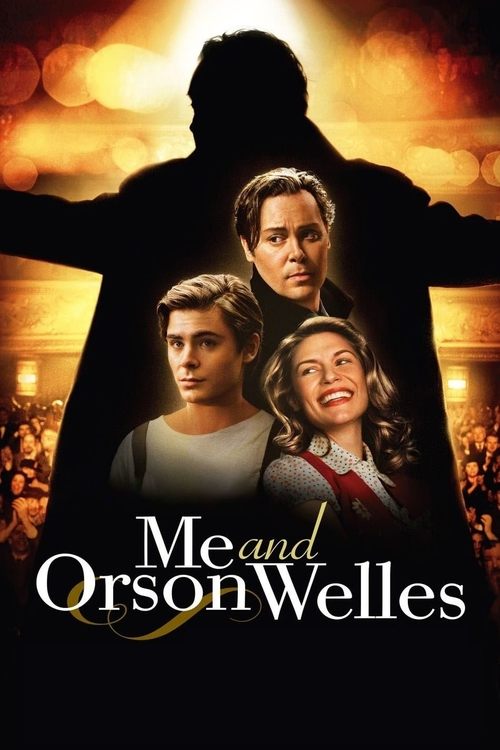
Linklater considers Nouvelle Vague the second chapter in an informal cycle that spans his career. Me and Orson Welles is the first: initiation, a young man entering the orbit of a mercurial genius. Nouvelle Vague is the artist's flowering, the chaotic birth of a masterpiece. Where'd You Go, Bernadette is creative stagnation in middle age. Blue Moon, released earlier in 2025, is decline and mortality.
All four films share screenwriters Holly Gent and Vincent Palmo Jr. All explore what it means to make art inside the mess of being alive. And the Orson Welles parallel is structurally exact: both center on an outsider swept into a production that will change its medium, told from the ensemble's perspective rather than the genius's. If you've seen Zac Efron navigate the Mercury Theatre in 1937, you already know the emotional architecture of Nouvelle Vague.
Truffaut Is Everywhere
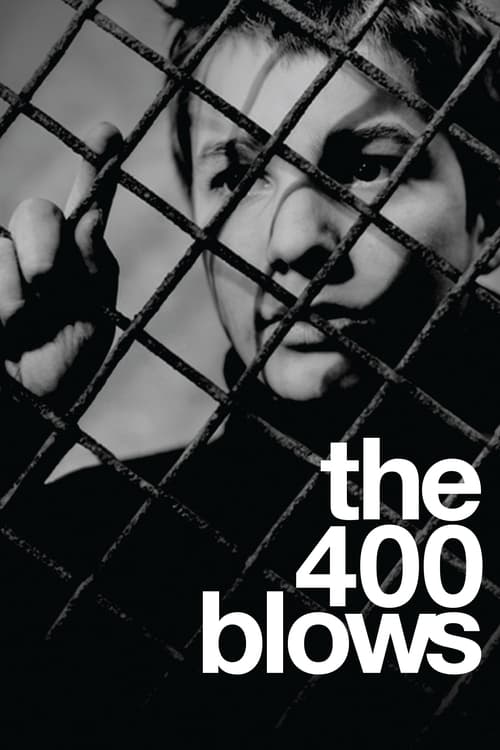
François Truffaut operates at three levels in Nouvelle Vague. First, he's a character — Adrien Rouyard's warm portrayal anchors the communal atmosphere. Second, he's a tonal model: the film often feels more like a Truffaut movie about Godard than a Godard movie, with the coming-of-age gentleness of The 400 Blows and the backstage energy of Day for Night. Third, he's literally the first sound you hear — the film opens with Jean Constantin's theme from The 400 Blows, establishing the New Wave's origin point before Godard enters the frame.
Linklater's affection for Truffaut is about scale. "In the 1950s, he wrote about what the film of the future will be," Linklater said. "He saw them as love letters. You can make a film about a trip you took or a love affair." That reduction of cinema to something personal — not grand, not important, just yours — is the animating spirit of Linklater's entire career.
The Masters in the Margins
Nouvelle Vague gives screen time to three "mentor" encounters that reveal its deeper argument. Godard meets Roberto Rossellini being driven through Paris streets — "Shoot quickly," the master advises. He watches Robert Bresson filming Pickpocket in the Métro. He visits Jean-Pierre Melville at Studios Jenner. These scenes are staged like brief, enigmatic transmissions of wisdom.
Their inclusion is Linklater's quiet thesis statement. The New Wave didn't spring from nowhere. It inherited from Neorealism, from Bresson's rigor, from Melville's genre-consciousness. And so Nouvelle Vague becomes a film about cinematic inheritance itself — a chain that runs from Rossellini through Godard through Linklater, each generation shooting quickly and making it personal.
The Word That's Never Spoken
One detail crystallizes everything. The word auteur — the concept most identified with the French New Wave — is never spoken in Nouvelle Vague. Not once. And the silence is deafening.
It's not an oversight. Linklater's entire filmography, from Slacker forward, argues that the best art comes from collective energy, not individual genius. By erasing the word while celebrating the movement, he quietly proposes that the New Wave's real legacy isn't the cult of the director — it's the spirit of a group of friends who decided they could make movies their own way, with no money and no permission.
That's the pattern the full influence map reveals. Rozier over Godard. Ensemble over auteur. Hangout over manifesto. Warmth over provocation. Linklater made a film about the birth of modern cinema and turned it into something that feels like showing up to a friend's shoot and staying for the whole summer.
If you want to start somewhere, start with Adieu Philippine. It's the film that unlocks Nouvelle Vague's real frequency — and it might just be the most purely enjoyable New Wave film you've never seen.