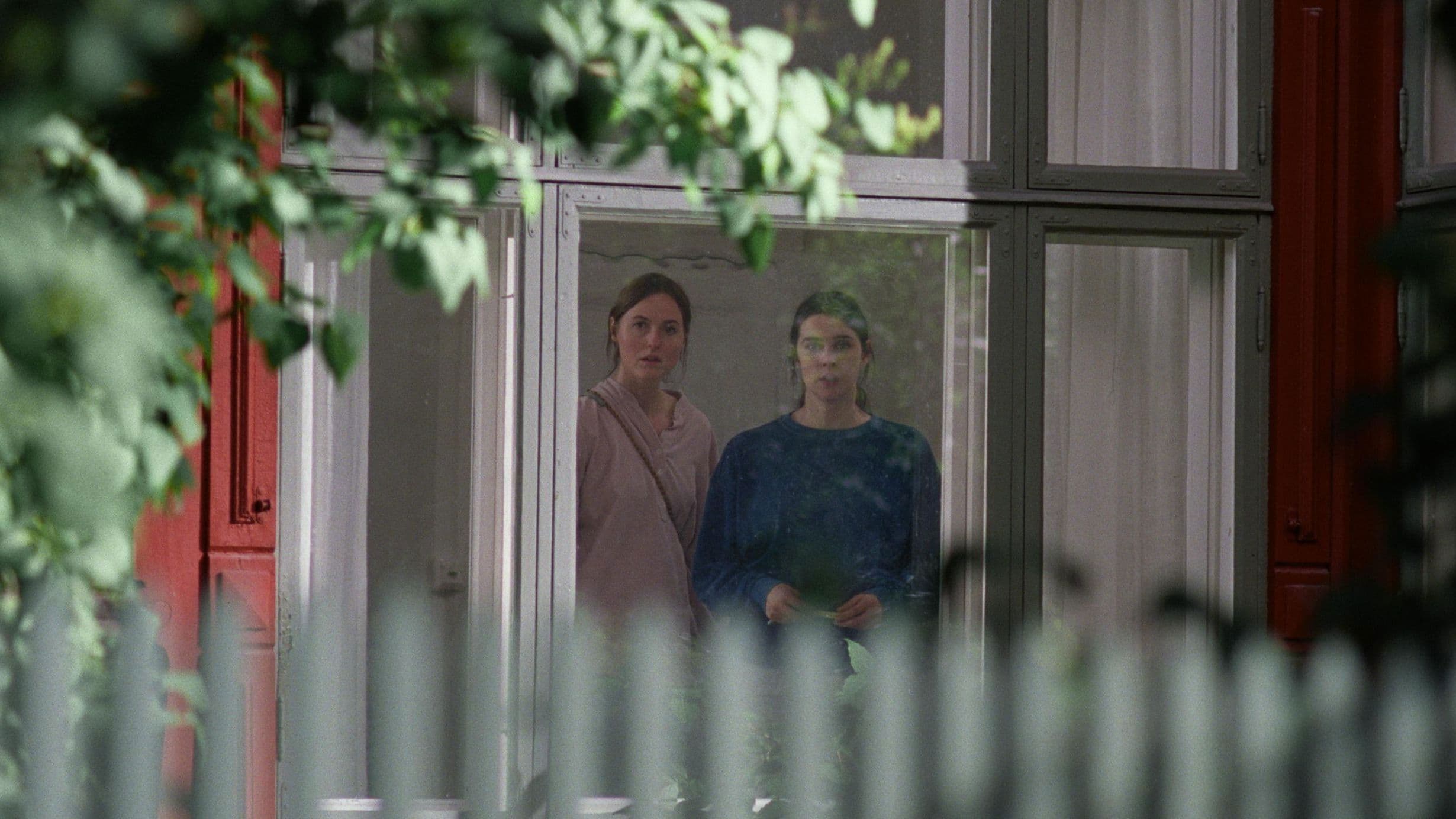
Not only a Scandinavian film: Sentimental Value.
Joachim Trier
During the research phase for Sentimental Value, Joachim Trier held a small card in his hands. It was his grandfather's arrest record from Grini, the Nazi concentration camp outside Oslo where Erik Løchen — resistance fighter, future filmmaker, future ghost in every Trier film — was imprisoned during World War II. "Objects can truly carry memories and lives," Trier said. He was fifty years old. He had two small children. And he was making a film about what happens when three generations of a family can't talk to each other but won't stop trying through art.
Sentimental Value won the Grand Prix at Cannes and has since collected nine Oscar nominations, but its emotional engine isn't prestige ambition — it's the specific, almost desperate attempt of a third-generation filmmaker to understand what got passed down to him without anyone saying a word. The film he made to work through that question draws from an extraordinary range of sources: Scandinavian masters, American soul music, Polish piano compositions, Beatles documentaries, graphic novels, and a 90-year-old actress who starred in his grandfather's debut film sixty-five years ago.
The grandfather who haunts everything
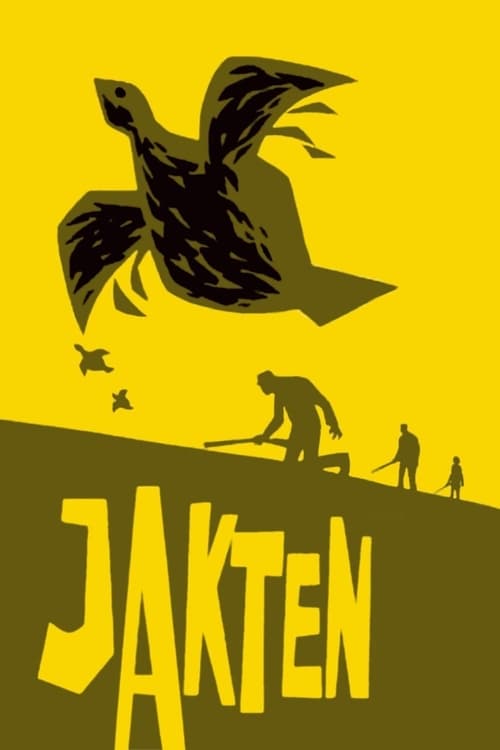
Erik Løchen survived Grini, became a director, and made Jakten (The Hunt, 1960) — a film later voted the greatest Norwegian film of all time by Rushprint. His follow-up, Remonstrance (1972), had five reels that could be projected in any order, yielding 120 possible versions of the same movie. That kind of radical structural ambition runs in the bloodline.
For Sentimental Value, Trier cast Bente Børsum — now in her nineties — as the narrator. She was the lead in Løchen's debut. Her own mother was also imprisoned during the war. "Bente played the lead in my grandfather's 1960 film; both were very young," Trier said. "It was her first lead role. It was his first film." Putting her voice over a story about inherited trauma creates a loop that spans Norwegian cinema's entire modern history.
Gustav Borg's fictional biography mirrors Løchen's closely: a filmmaker whose mother was part of the resistance, whose art and family damage are impossible to separate. Norwegian film scholar Anne Gjelsvik has pointed out that the house used for filming is the same location where Trier staged the suicide scene in Oslo, August 31st — a detail that turns the production design itself into a layer of memory.
The Bergman problem
Every Scandinavian director has to deal with Bergman. Trier's way of dealing with him is unusually honest: "It's always a problem when I say at home that Bergman inspires me; everyone wants to take me down a notch."
The most visible Bergman fingerprint is the family surname: Borg. As in Isak Borg from Wild Strawberries — an aging man taking stock of his life through memory and family confrontation. But the deeper pull is Persona. There's a shot in Sentimental Value where Gustav's face dissolves into his daughters' through double exposure — shot in-camera by DP Kasper Tuxen, who rewound the film and re-exposed it. Editor Olivier Bugge Coutté confirmed it was added just two weeks before picture lock. "It's like saying, 'Wake up, because now things are going to happen,'" he explained.
And then there's a scene Trier didn't plan at all: Renate Reinsve and Elle Fanning sitting in a theater, dressed in white, framed by red curtains. "Suddenly, we thought, 'God, this is straight out of Cries and Whispers,' which was anything but consciously planned." Bergman as unconscious inheritance — which is, of course, exactly what the film is about.
The Beatles documentary that unlocked the father
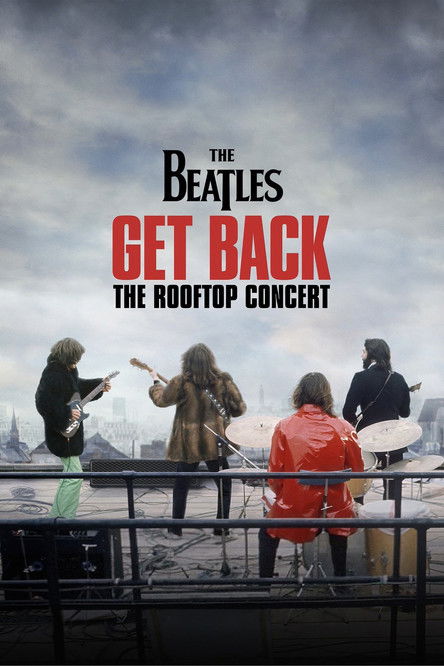
This is the influence nobody would guess. While writing Sentimental Value, Trier watched Peter Jackson's Get Back — the eight-hour Beatles documentary — and something clicked.
"It's just these humans trying to talk about splitting up a band and making songs about it. Playing, but not talking about it," he said. "Paul sitting with his best friends, feeling he's slipping away from them and creating art around that. People express themselves directly in art and indirectly socially."
That observation became Gustav Borg's entire character logic. He's a filmmaker who can articulate profound emotional truths through his medium but can't hold a simple honest conversation with his own daughters. His autobiographical Netflix project isn't a vanity exercise — it's the only language he has. Watch Get Back before Sentimental Value and you'll see McCartney composing "The Long and Winding Road" in real time, processing loss through melody while the band disintegrates around him. That's Gustav. That's the whole film.
An actress in crisis, Cassavetes-style
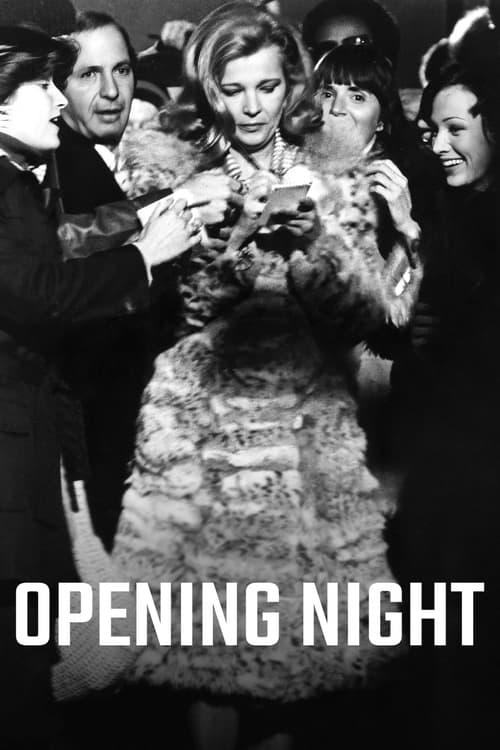
Renate Reinsve watched Opening Night to prepare for her role. So did cinematographer Kasper Tuxen, who studied it specifically "for its visualization of an actress struggling with a nervous breakdown." The parallel is structural: Gena Rowlands spiraling through a personal crisis while performing on stage, the camera refusing to look away.
Nora's opening-night meltdown at the Nationaltheatret in Oslo — a stage actress paralyzed by personal turmoil while the audience watches — is the film's most directly Cassavetian scene. But the influence goes deeper than that sequence. Trier directs what he calls "jazz takes": "You know the structure, you know the tune. But let's phrase it differently." That trust in actors' instincts over precise blocking, that belief that truth emerges from improvisation within structure — that's pure Cassavetes DNA.
The Scorsese film nobody expects
Eskil Vogt — Trier's co-writer on every film — called The Age of Innocence "a key text for Sentimental Value." Tuxen studied it for "its camera movement and depictions of the passage of time." When Trier heard this cited at the BIFAs, he simply said: "Martin Scorsese is one of the most important directors who has ever lived."
The connection isn't tonal — it's mechanical. Michael Ballhaus's camera in The Age of Innocence glides through parlors with tactile attention to objects and surfaces that encode class and emotional repression. That same approach governs how Trier and Tuxen treat the Oslo house: the camera's relationship to rooms, furniture, and architectural details conveys generational history without a word of dialogue. Every pan past a lamp, every hold on a wallpaper pattern, carries the weight of what can't be said. Scorsese showed that a period drama could use production design as a form of emotional storytelling. Trier took the lesson and applied it to a Norwegian living room.
A house made of graphic novels
Trier is a devoted Chris Ware reader. "I'm very inspired by the work of Chris Ware. He's someone who really dealt with the sense of place and identity." Ware's Building Stories — a box set of pamphlets tracing a Chicago apartment building's residents over decades — shares the film's obsession with how architecture absorbs human experience.

Norwegian scholar Anne Gjelsvik identified an even closer source: Richard McGuire's Here, a graphic novel depicting a single room across millennia through non-chronological layered panels. She wrote that she "immediately thought of this book" when hearing the film would center a house.
The 130-year house montage in Sentimental Value — a bravura sequence spanning the home's entire life — has its conceptual DNA in both works. Production designer Jørgen Stangebye Larsen made it physical: he built a replica on a soundstage with removable wallpaper layers, so the 1980s renovation scene involved actually tearing down to reveal underlying 1930s patterns. Walls with memory built into them. "If I think about the area where I enter the front door," Trier said, "I can leaf through it like layers of time."
The score that was composed blind
Polish composer Hania Rani wrote the entire Sentimental Value score from the script alone — without seeing a single frame of edited footage. "I prefer to ponder sound in separation from the image," she said. "Music as an inherent counterpoint."
Before production began, Rani visited the actual Oslo house with a sound engineer and made field recordings of objects and furniture — "To explore its interiors so closely inevitably reminded me of getting to know a real person, with all their vulnerable parts and secrets." She composed first on a Prophet synthesizer, then translated to an acoustic string quintet, which she described as a breakthrough: the synthesizer's detuning and weird sonic textures, rendered by acoustic instruments, produced something neither electronic nor classical.
Around Rani's score, Trier built a sonic world from soul-folk: Terry Callier's "Dancing Girl" opens the film, Labi Siffre's "Cannock Chase" closes it. "I wanted a soul folk sound — that kind of early-era American, very sophisticated orchestration," Trier said. Gil Scott-Heron's "Pieces of a Man" lives in the middle. New Order and Roxy Music score Gustav's generational world. The philosophy was deliberate: "While the film is called Sentimental Value, that doesn't mean we had to sentimentalize everything, especially the music."
Chekhov on stage, O'Neill underneath
Nora performs in The Seagull in the film's opening — a choice that's anything but arbitrary. Chekhov's play is about frustrated artistic ambition, a destructive patriarch-artist, and the collision between generations. The Seagull's Nina and Trigorin parallel Nora and Gustav's dynamic closely.
"Stellan and I talked a lot about Chekhov," Trier said. "Ibsen is someone you have to deal with as a Norwegian, but also I had to look towards American playwrights. O'Neill of course, but also Arthur Miller." The family structure — the returning patriarch, the resentful daughters, the house as contested inheritance — maps onto O'Neill's Tyrone family in Long Day's Journey Into Night. But Trier insisted the film shouldn't feel theatrical: "You don't have the wind and the trees in the theatre." The tension between theatrical architecture and cinematic escape is the film's structural engine.
What the full map reveals is a filmmaker who needed two traditions to make one film. The Scandinavian inheritance — Bergman, Ibsen, his own grandfather's resistance-era trauma — gave him the emotional material. But it took American soul music, a Beatles documentary, Cassavetes' faith in actors, and Scorsese's camera movement to find a form that could hold all that weight without collapsing into solemnity. As Trier put it: "The world is in turmoil. It just feels like we're ready for some tenderness." The combination of rigor and warmth, of formal ambition and genuine vulnerability, is what makes Sentimental Value feel like nothing else this year.
If you want to start somewhere before seeing the film, make it Opening Night. Cassavetes made a movie about what happens when art and life bleed into each other so completely that a woman can't tell which one is destroying her. That's the current running beneath every scene in Sentimental Value — and Gena Rowlands does things in that film that will change how you watch Renate Reinsve.