What Lives Inside Park Chan-wook's No Other Choice
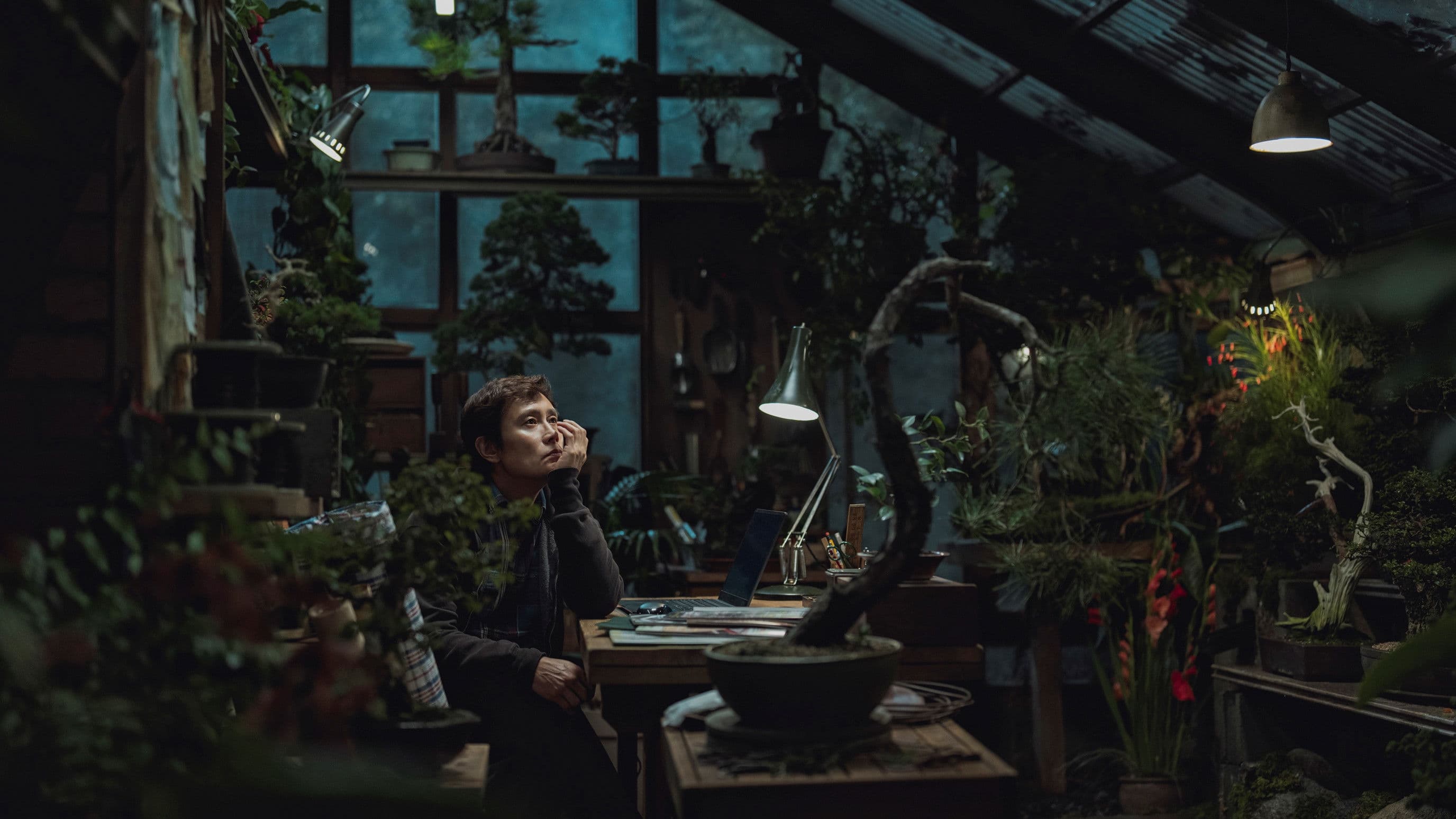
Park Chan-wook
Park Chan-wook grew up watching American cartoons on AFKN — the U.S. military broadcast network that beamed into Korean households — with no subtitles. No dialogue, no context. Just images. A coyote chasing a bird off a cliff. A cat flattened by a piano. Pure visual storytelling absorbed by a kid who didn't speak the language.
Decades later, when an interviewer suggested that vintage American cartoons — not just Hitchcock — might have shaped his visual style, Park laughed. "That's very accurate! And you're right, people tend to point to the highbrow influences."
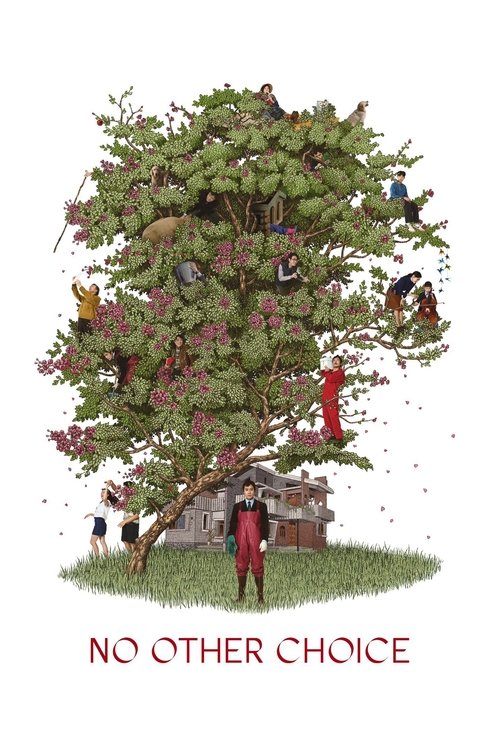
No Other Choice is the film where the lowbrow ones finally take over. A fired paper-mill manager murders his way through the job competition in what might be the funniest, most meticulously composed bloodbath in recent memory. But the influences that built it are wilder and more contradictory than anything in Park's filmography. A Road Runner cartoon, a French Baroque viol player, a novel he couldn't stop thinking about for twenty years, and a 1949 British comedy he discovered embarrassingly late.
The cartoon logic underneath the carnage
When asked which cartoons specifically, Park named Road Runner. Not as a joke. As a compositional influence.
He pointed to two scenes: the long shot of people screaming as they flee, and the overhead take of three bodies crawling toward a gun beneath a cabinet. "Scenes like that are very reminiscent of cartoons," as he put it. "It reminds all of us of our younger days. That's what elicits innocent laughter."
What he took from Chuck Jones is geometry. The murder sequences are staged as escalating Rube Goldberg disasters — a gun wrapped in plastic bags, hands stuffed into oven mitts, victims who refuse to die on schedule. Man-su plots his kills with the ambition of a Bond villain and executes them with all the grace of Wile E. Coyote. That overhead cabinet shot is pure Jones: three bodies arranged in a single geometric frame, scrambling like cartoon characters who just heard a gunshot. The oven-mitt scene — where Man-su fumbles through latex, rubber, and finally gardening gloves before pulling a trigger — plays like a live-action cartoon gag stretched to the point of agony.
Start with any Road Runner short. Then watch Man-su try to commit murder. The connection will ruin you.
The novel he couldn't let go of for twenty years
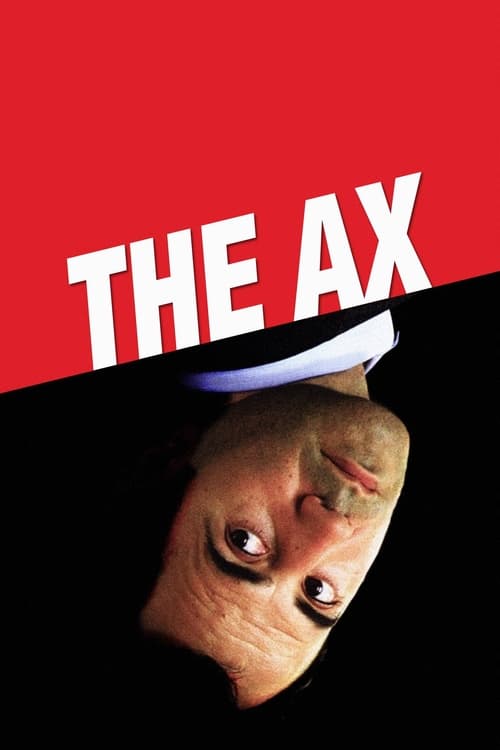
In 2005, Park read Donald Westlake's The Ax — a pitch-black American novel about a laid-off manager who creates a fake company, collects résumés, and murders the best candidates. He knew instantly he wanted to adapt it. Then he learned Costa-Gavras had already made it into a film.
"I was honestly devastated at first," Park admitted.
But watching Costa-Gavras's The Axe changed everything. The French master used voiceover narration. Park wanted none of it. "I wanted to show psychology only through action and dialogue. That is the challenge of cinema — how to communicate inner life without explaining it." He reduced the body count to make each death heavier. He expanded the wife from a background presence into an active moral agent. And he added the element that made him commit: the family discovering the murders. "Perhaps this was the decisive factor," he said.
Costa-Gavras's wife and son produced the film. The closing credits dedicate it to him. This isn't a remake — it's a twenty-year creative conversation. The Korean title itself, 어쩔수가없다 (It Can't Be Helped), rejects The Axe's violent bluntness for something more fatalistic. Park considered calling it Axe in Korean but found the imagery "too cruel."
Costa-Gavras's The Axe is lean, cold, French. Park's version is baroque, sweaty, Korean. Together they prove the same story reads completely differently through different national anxieties.
The influence he didn't plan
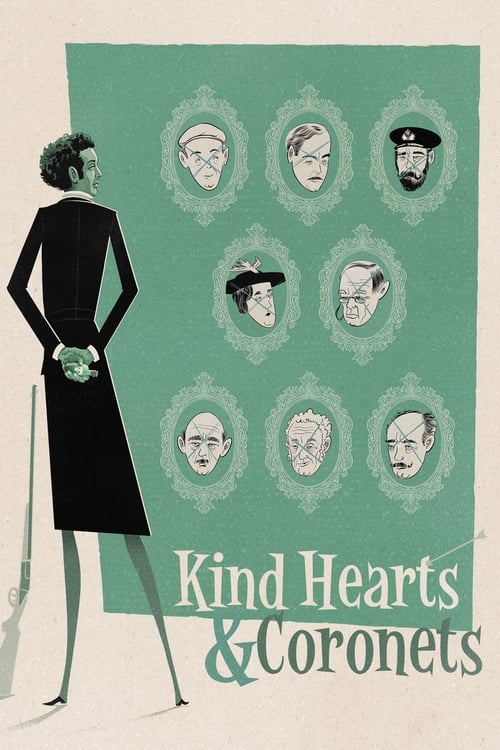
Here's a detail that hasn't made it into English-language coverage: Park only discovered Kind Hearts and Coronets — the 1949 Ealing comedy about a man who systematically murders everyone ahead of him in a line of succession — while he was already deep into adapting The Ax.
"Embarrassingly," he admitted, "I only learned about Robert Hamer's film while in the middle of the adaptation process."
The structural parallel is unmistakable: both films follow a protagonist eliminating rivals one by one, with escalating absurdity. But the gap is what makes it interesting. Dennis Price's killer in Kind Hearts is suave, elegant, always in control. Man-su is catastrophically inept — "about as competent as Mr Bean, relying on notes scribbled on his hand," as one reviewer put it. Park didn't consciously borrow from Hamer. He reinvented the same wheel and only realized it halfway through. Which tells you something about how deep the serial-elimination comedy sits in genre DNA.
Kind Hearts and Coronets remains one of the driest, most perfectly constructed comedies ever made. If you've seen No Other Choice, you'll recognize the architecture immediately — and appreciate how completely Park demolished it.
Chaplin's ghost in the factory
"I've never considered tragedy and comedy to be two different elements," Park said. "I've always considered them to be one thing."
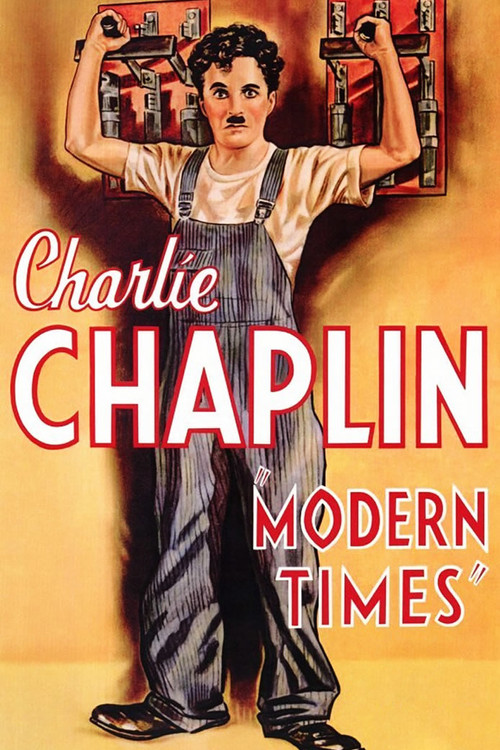
His reference point is Modern Times. Not as a vague spiritual ancestor — as a structural model. A worker crushed by industrial machinery, rendered absurd and heartbreaking at once.
Lee Byung-hun didn't even know he was doing slapstick. "Critics mentioned the film was a slapstick comedy," the actor recalled. "Until then, I didn't realise that's what I was doing." Then someone pointed out the Chaplin connection: the moustache, the final scene of Man-su wandering through an automated factory like a lost soul. "I thought: wow."
That factory finale seals it. Man-su walks through a fully AI-controlled plant — no workers, no humans, no purpose for him. Behind him, the AI shuts off lights one by one. "It's as if he's being chased by this new technology," Lee said. Chaplin was swallowed by gears. Man-su is simply erased.
Park never told Lee to be funny. "He never exaggerated his actions," Park confirmed. "That sincerity is what makes the scenes hilarious." The comedy is an accident of desperation, which is exactly what makes it Chaplinesque.
The colour of a country that doesn't exist anymore
Park wanted his film to look like a 1970s American movie — warm Technicolor, heavy grain, sun-drenched suburbia. The catch: he shot digitally.
The process was obsessive. Park and cinematographer Kim Woo-hyung ran parallel tests, shooting the same subject on both digital and film to compare. They then applied grain overlays replicating specific 1960s film stocks — not generic "film look" filters, but the grain patterns of a particular sensitivity, particular millimeter, particular brand.
"Rather than blindly clinging to vague conventions of what is often called 'film look,'" Park said, "I wanted to begin with a clear and precise understanding." Colorist Park Jin-ho steered away from warm tones entirely, aiming for density and weight — a Kodachrome photograph of the Korean middle-class dream, shot through with autumn light that turns menacing.
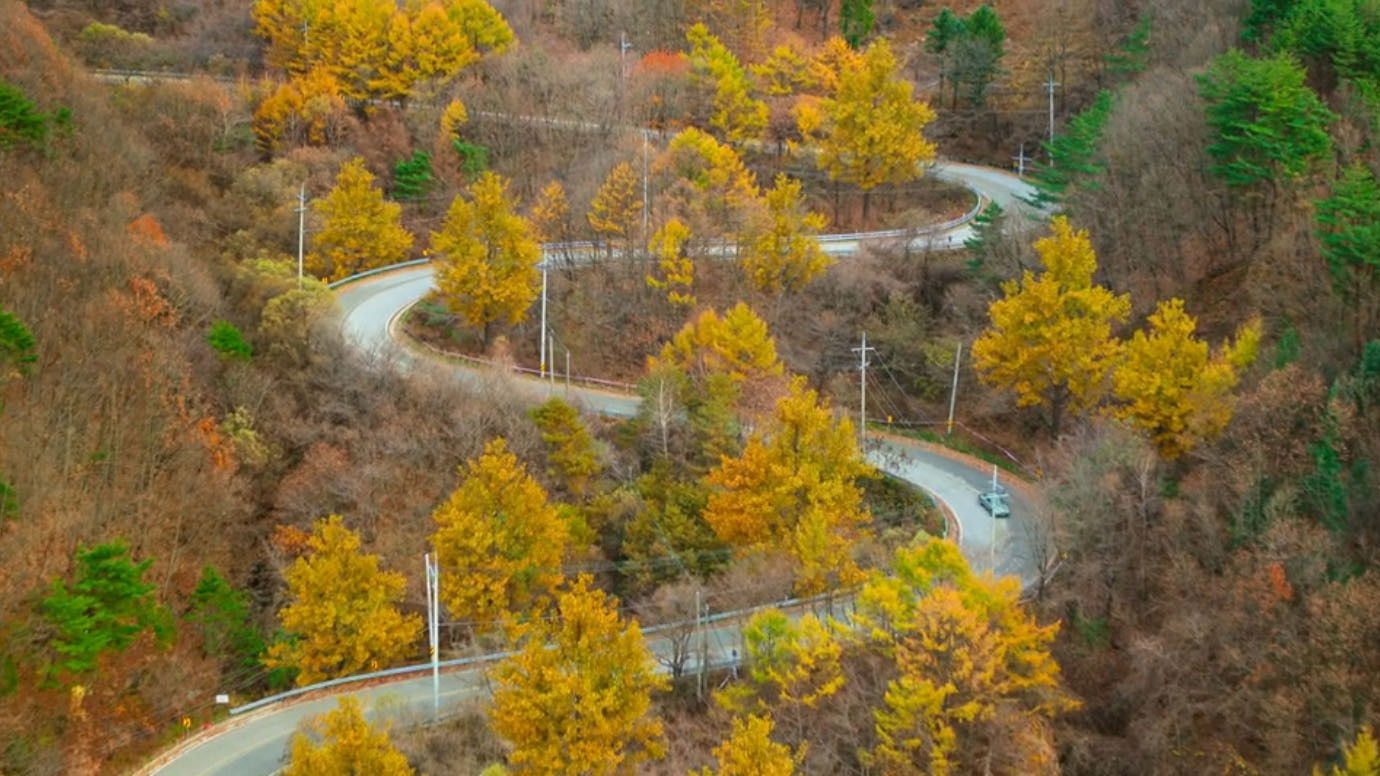
The result gives No Other Choice its secret weapon: it looks like a memory of prosperity. The suburbs glow. The houses gleam. The colour palette says everything is fine. And then someone gets shot with oven mitts on.
The murder you can't hear over Cho Yong-pil
The first kill in No Other Choice might be the funniest five minutes of any 2025 film, and it runs on Korean pop.
Park chose Cho Yong-pil's "Red Dragonfly" (1981) — a sentimental prog-rock ballad by a singer whose fame in Korea, as Park put it, is "on par with The Beatles." Man-su cranks the stereo to mask the gunshot. The music is soaring, romantic, completely wrong for what's happening on screen. "It had to be an undeniably good song," Park said. "But it also could not go well with the scene."
The needle drops across the film — all from Korea's golden age of pop in the early '80s — aren't scored violence. They're scored denial. Man-su uses beautiful music the way he uses his fake company and his carefully typed letters: as a system that makes murder feel organized. Rational. Professional.
Park identified this scene as his favourite in the entire film. It's the one where his Looney Tunes instincts, his Chaplin sincerity, and his Hitchcockian precision converge into something no other filmmaker could have made.
The cello subplot nobody's talking about
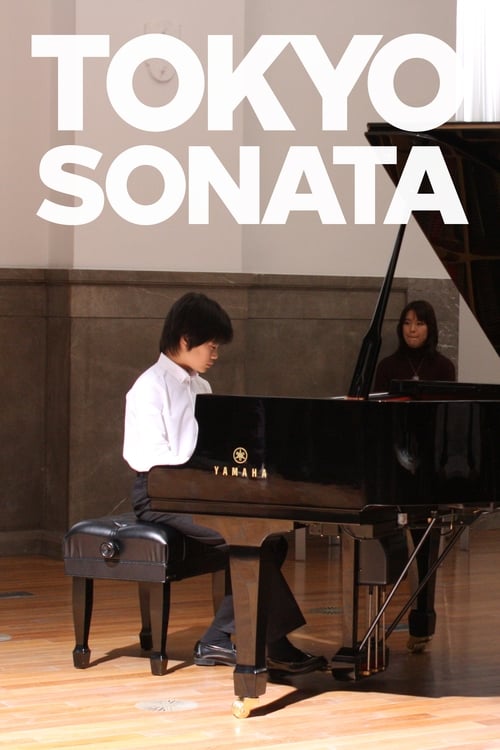
Kiyoshi Kurosawa's Tokyo Sonata follows a salaryman who hides his firing from his family. His child is a music prodigy. The instrument lessons are the last expense the family won't cut. The child's performance becomes a moment of transcendence amid collapse.
No Other Choice follows a salaryman who hides his firing from his family. His daughter Riwon is a cello prodigy. Her lessons are the last expense Man-su won't cut. Her performance becomes a moment of transcendence amid collapse.
Park hasn't acknowledged the connection directly, but the borrowing is almost architectural. What he changed is everything around it: Kurosawa's film is quiet, naturalistic, Japanese. Park weaponizes the same structure for baroque Korean black comedy. And Riwon's climactic piece — based on Le Badinage by seventeenth-century French viol composer Marin Marais, arranged by Park's longtime collaborator Cho Young-wuk — adds a layer Kurosawa never reached for. The daughter's music isn't just transcendent. It's playing a piece from a tradition of courtly elegance while her father is out murdering people.
Tokyo Sonata is a devastating, under-seen masterpiece about economic shame. Watch it before No Other Choice and the family scenes hit twice as hard.
What the map reveals
Here's the pattern: every influence on No Other Choice pulls in a different direction. Road Runner cartoons and Dostoevsky. Chaplin's physical comedy and Technicolor nostalgia. A French political filmmaker and a seventeenth-century viol player. Korean pop ballads and a 1949 Ealing comedy the director didn't even know existed until he'd half-built the same thing.
Park Chan-wook doesn't synthesize influences — he detonates them against each other. The more personal the pain, the more absurd the form. A man terrified of losing everything he's built becomes Wile E. Coyote. A factory that erased its workers becomes a Chaplin set piece. A murder becomes a Cho Yong-pil concert.
If you watch one film before No Other Choice, make it Kind Hearts and Coronets. Not because it's the closest comparison — it's not — but because watching how Robert Hamer played the serial-elimination comedy with perfect English restraint makes Park's unhinged, grief-stricken, oven-mitt-wearing Korean version feel like exactly what it is: the same ancient story told by a completely different nervous system.