The Bleakest Robin Hood Ever Filmed
Michael Sarnoski
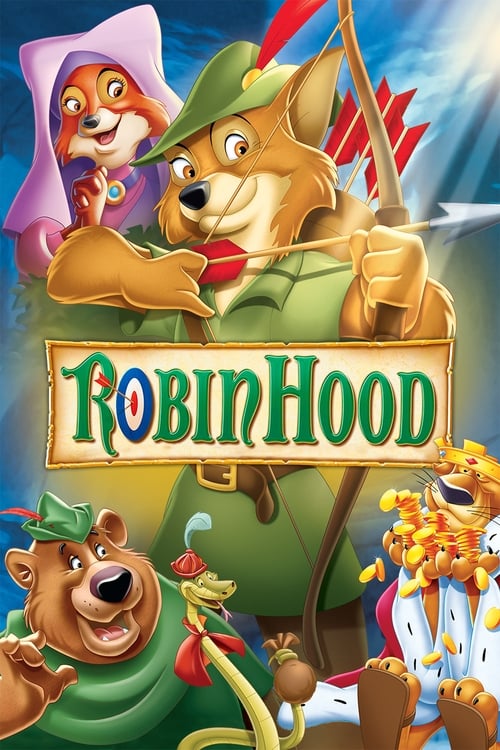
Michael Sarnoski had the action figures. The whole set. The little plastic treehouse, the merry men, the cartoon fox in his feathered cap. As a kid he loved Disney's Robin Hood the way some kids love a particular James Bond, fiercely and completely, the version that gets there first and never lets go.
Then he read the old ballad. The medieval one, where the betrayal that kills Robin plays out with no song attached and the woman bleeding him lets him bleed to death. No dancing. No oo-de-lally. Even as a kid, he remembers thinking: "Oh, that's not a dancing fox."
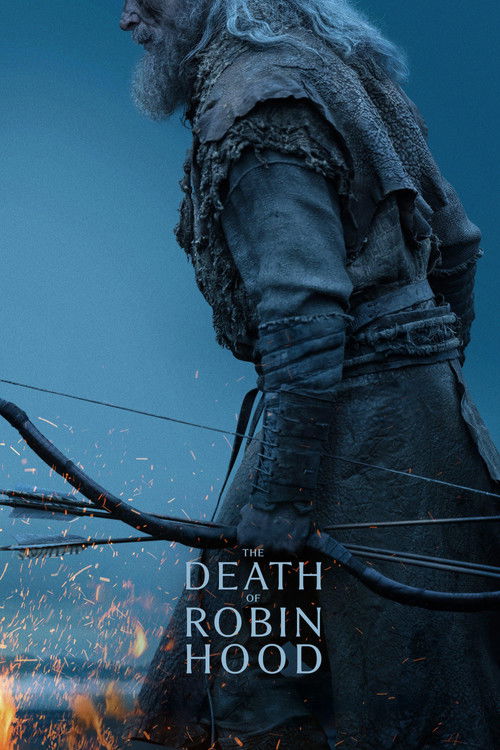
That gap, between the playset and the ballad, is the whole movie. Sarnoski didn't make The Death of Robin Hood because he hates the legend. He made it because he loves it enough to ask what it's been covering up. Here's the map of everything he pulled from to do it.
The cartoon he had to kill
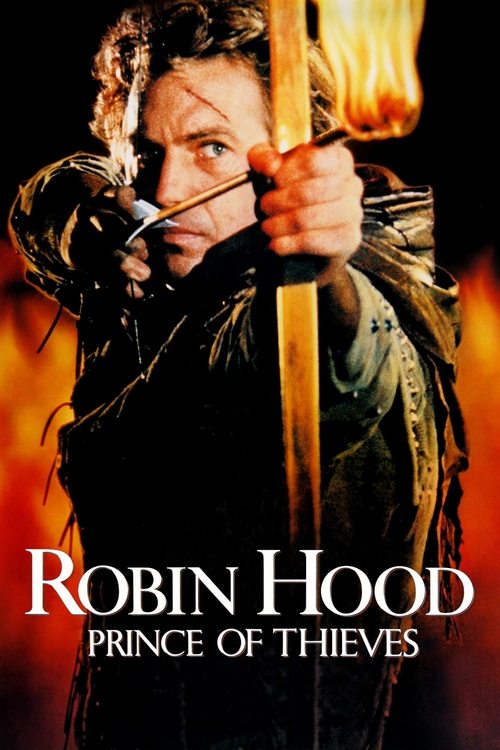
Start where he started: with the version he adored. The 1973 Disney film and, a little later, Robin Hood: Prince of Thieves, the Costner one he calls the other half of his childhood. "I had all the toys, the treehouse set, and all the little action figures," he says, and you can hear the kid in it.
What he took from them isn't an image or a technique. It's a target. Everything warm and anthropomorphic and noble about those films is the thing his movie systematically undoes. The cruelty of his opening only lands because some part of you is still humming the song. He even encodes the betrayal in color: Lincoln green, the single most iconic Robin Hood signifier, never touches his hero. The only people who wear it are Little John's family, the ones still living inside the adventure-story version of the world.
If you've only ever met the cuddly fox, watch the Disney film again before this one. It's the sweetest possible setup for the cruelest possible punchline.
The Bergman film that taught violence to mean something
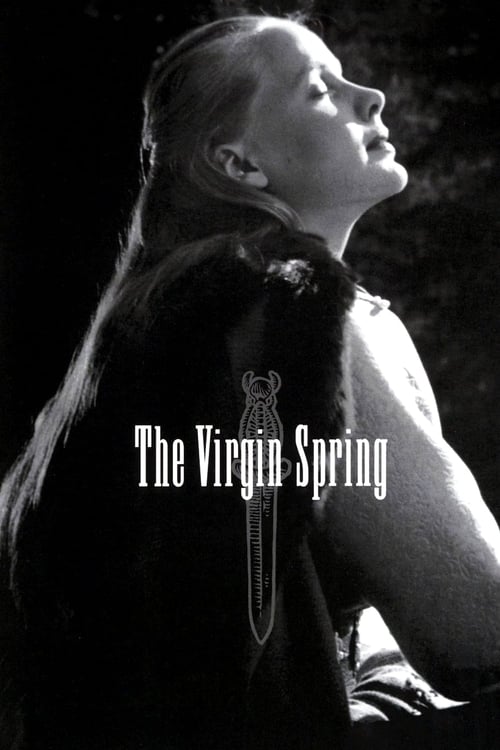
When Sarnoski describes the world he wanted, he reaches past every previous Robin Hood and lands on Ingmar Bergman. "It was a hard place to survive in, and it was cold and bleak," he says of the medieval setting, naming The Virgin Spring as the thing he was chasing.
What he took is Bergman's refusal to let brutality stay meaningless. The Virgin Spring turns on a horrific killing and then a father's collapse of faith, the sense that an atrocity demands either vengeance or grace and there's no third option. You feel it in the back half of Sarnoski's film, once Robin reaches the priory and the talk turns to balance, forgiveness, a place that was holy long before anyone here was born. The film keeps asking Bergman's question: can anything sacred be wrung out of senseless harm?
Bergman answers it with the most famous closing image in his filmography. Go find out what springs from the ground where the worst thing happens.
The Viking trance behind the silence
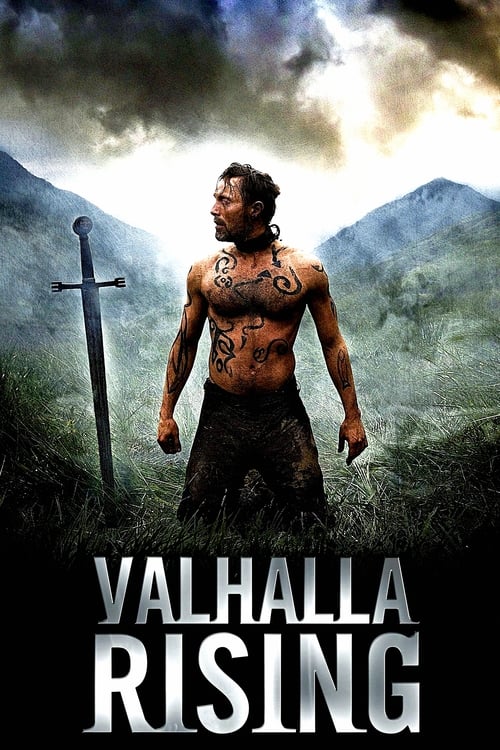
The other film Sarnoski names in the same breath is Nicolas Winding Refn's Valhalla Rising, and you can practically see it in the first act. The near-silence. The mud and mist. Men who barely speak moving across a landscape that feels like a spiritual void rather than a place on a map.
What he took is Refn's conviction that brutal men in brutal country can stumble into the metaphysical. Refn's mute warrior drifts toward a transcendence he can't name; Jackman's monosyllabic Robin drifts toward death and the faint possibility of grace. The whole tonal architecture, especially once the film reaches its strange druid-haunted island, runs on the idea that someone who "already feels like they're dead," as Sarnoski puts it, might still be heading somewhere that matters.
Refn's film is hypnotic and almost wordless, a thing you sink into rather than follow. If the opening of Robin Hood puts you in a trance, this is where the trance was invented.
The Western everybody saw coming, including the star
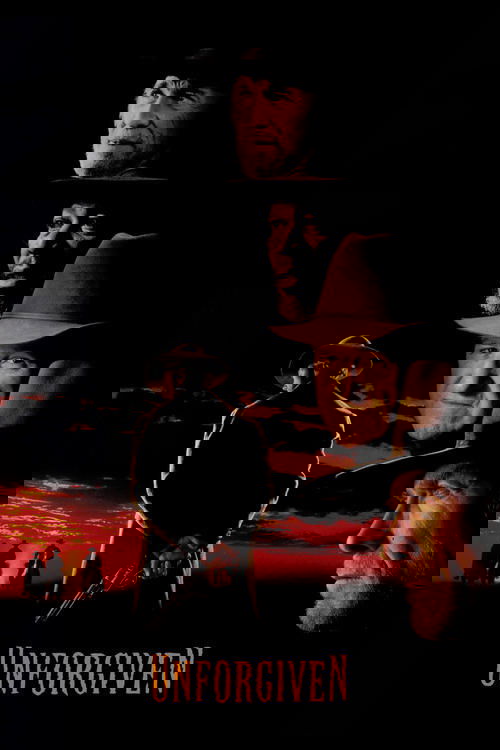
Here's the comparison that greeted the film everywhere: this is the Unforgiven of Robin Hood movies. Sarnoski leans into it, lining his film up with Eastwood rather than the tights-wearing merry men. And when someone asked Hugh Jackman whether this was his own Unforgiven, he didn't hedge: "That film was right at the forefront for me, for sure."
But watch what Sarnoski actually does with it. Unforgiven gives you an aging killer haunted by what he's done, builds an unbearable pressure, and then releases it in one final, terrible reckoning. Sarnoski borrows the whole engine, the guilt, the reputation that won't die, the tease of a last stand, and then refuses to fire it. If you know Pig, you know he doesn't do the cathartic bloodbath. He uses your genre literacy against you, setting up the payoff so he can swerve into something quieter and stranger.
Eastwood's film is the gold standard for making screen violence feel like a wound rather than a thrill. Watch it for the climax Sarnoski deliberately denies you.
The other Jackman elegy
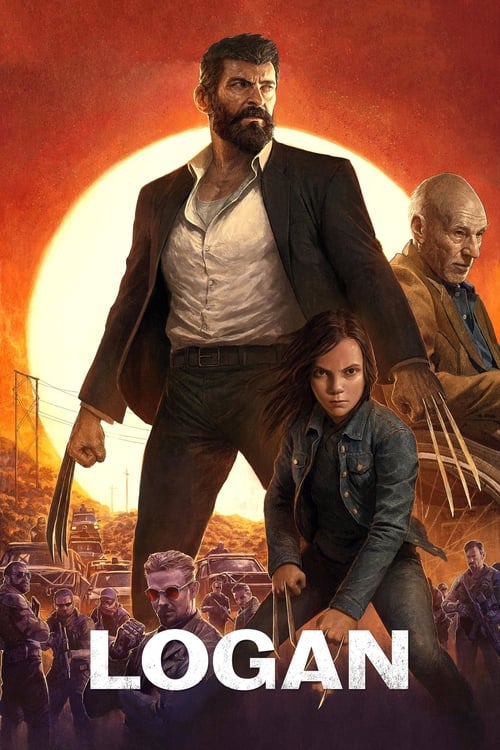
There's a reason early viewers kept saying Logan in the same sentence. Sarnoski cast Jackman partly for the viciousness he'd shown in films like that one, but mostly for the warmth underneath it. "No matter how many kids he kills," Sarnoski says, "you believe he can be redeemed."
What carries over from Logan is the shape of the thing: Jackman as an aging, self-loathing man of violence, reluctantly shielding a young girl, dragging six decades of regret behind him. Sarnoski even talks about needing Jackman to reach "a transcendently introspective space," a man visibly thinking back on his whole life, which is exactly the register Logan found for Wolverine's last ride. The difference is that Logan eventually lets him be the hero one more time, and this film keeps that door shut.
If Robin Hood leaves you aching for the version where the old warrior gets to save someone, Logan is that version. It's also where Jackman first proved he could play a legend who's ready to die.
The 1976 film that almost stole this title
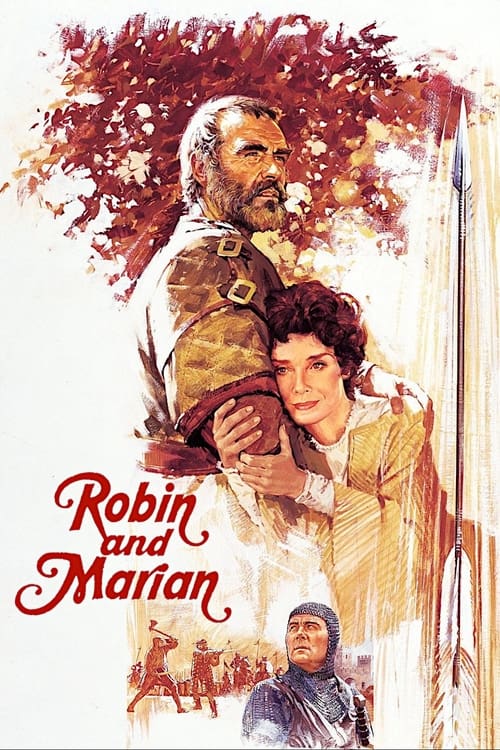
Long before Sarnoski, someone else mined the same death-of-Robin ballad. Richard Lester's Robin and Marian was nearly released as The Death of Robin Hood, until marketing got nervous and softened it. It's the same late-life premise: an older, tired Robin, the legend in its twilight.
What Sarnoski takes from it is mostly the road not taken. Lester gives his aging outlaw a rekindled romance, a bittersweet warmth, a last great love. Sarnoski wastes no time disabusing you of any of that. The shared title is almost all the two films have in common, which is precisely why it's worth seeing: it's the gentle, romantic version of the exact same ending.
Watch it for Sean Connery and Audrey Hepburn finding tenderness in the ruins, then notice how completely Sarnoski refuses to.
The cult medieval epic for the brave
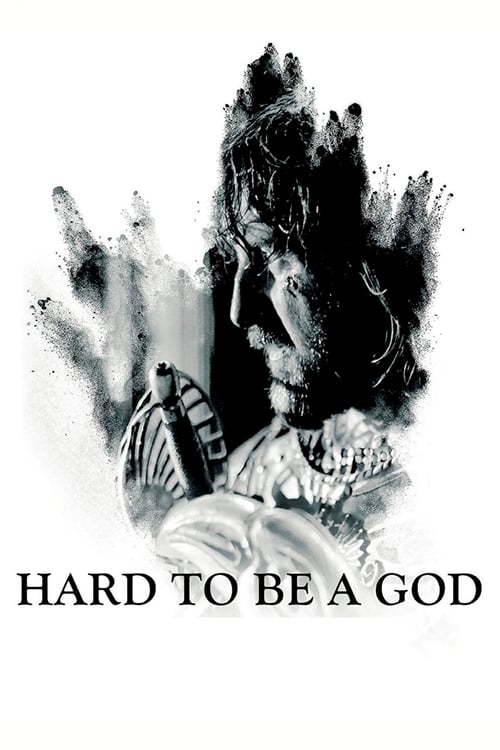
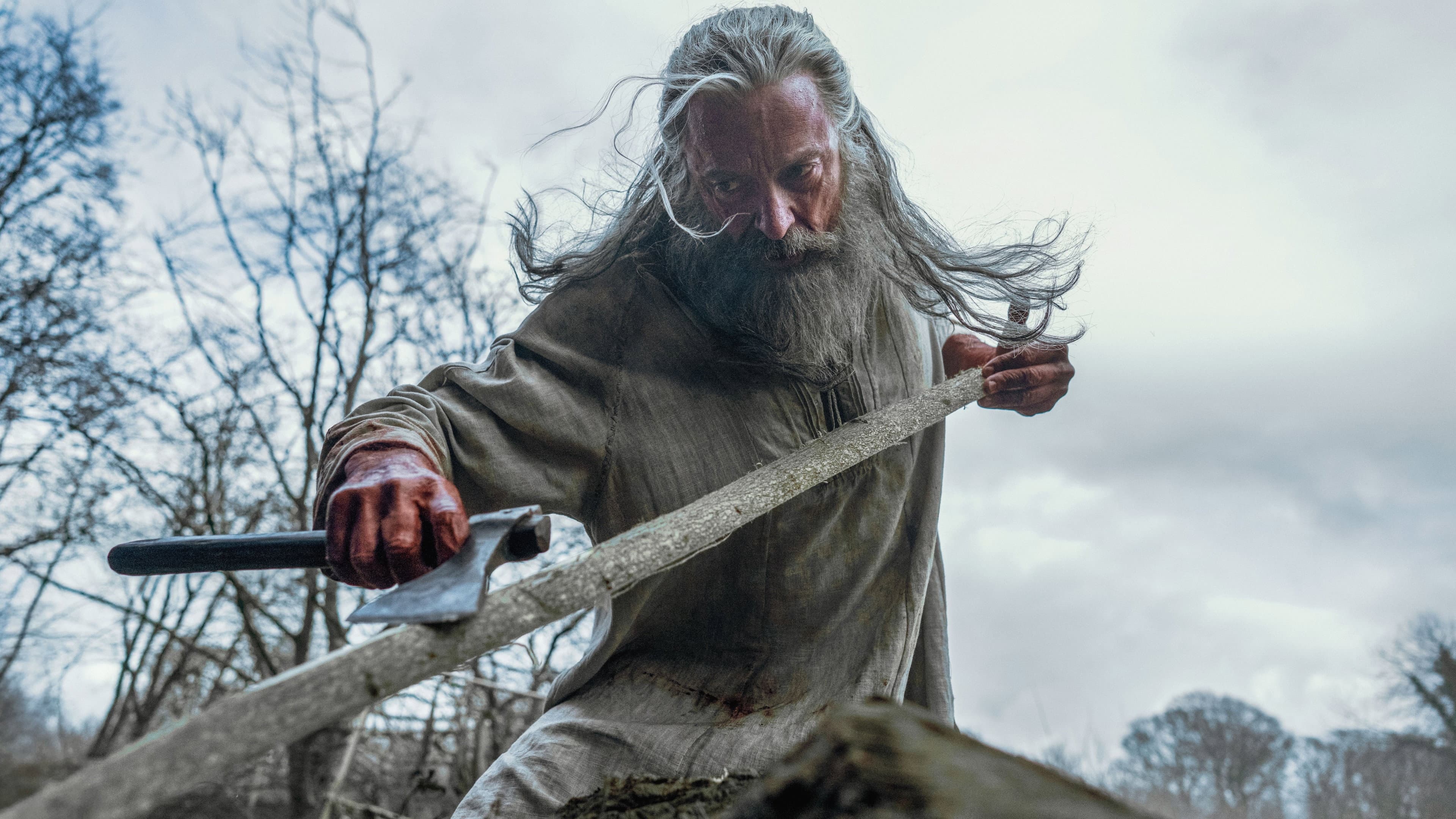
This one Sarnoski never mentioned, but it's the reference the sharpest viewers reached for, and it's the most rewarding rabbit hole on this list. Aleksei German's Hard to Be a God is three hours of medieval filth on what's technically an alien planet, a film so committed to mud, rot, and bodily misery that it makes most "gritty" period pieces look like the Disney cartoon.
The connection is the texture of Sarnoski's first act: the grime, the sense that you can smell every frame, violence presented as ugly fact rather than spectacle. Some viewers think this is exactly where Sarnoski should have pushed harder, that German's matter-of-fact squalor cuts deeper than post-Game of Thrones brutality. Either way, it's the truest cousin to what Robin Hood is reaching for.
Fair warning: Hard to Be a God is one of the most punishing films ever made, and one of the most astonishing. Come back to Robin Hood afterward and it'll feel almost tender.
A diverse scope of influences
Look at the whole spread and a single instinct runs through it. Sarnoski only borrows things so he can refuse what they promise. He takes the Disney warmth to betray it, the Unforgiven structure to deny its climax, the Logan setup to lock the hero out of heroism, the Robin and Marian title to strip away the romance. Even his color palette withholds the one shade everyone expects. He's a director who builds your expectations with loving precision, then quietly walks somewhere else, toward isolation, mortality, and a kind of grace that has nothing to do with winning. It's the same preoccupation that runs through Pig and the same one pulling him toward his Death Stranding adaptation: the man who already feels dead, inching back toward connection.
Start with Unforgiven. Not because it's the most obscure thing here, but because it's the clearest key to the trick Sarnoski is pulling. Watch how Eastwood spends two hours promising you a reckoning and then makes you sick to your stomach when it arrives. Then watch Robin Hood take you to the edge of that same promise and step back. Once you see the swerve, you see the whole film.