Miranda Priestly Was Never Anna Wintour. She Was Two Filmmakers in a Wig
David Frankel
For twenty years people thought Miranda Priestly was Anna Wintour. To Streep’s face, in interviews, on every press tour. This spring the cover finally came off. Streep finally said it out loud: “If Mike Nichols and Clint Eastwood had a baby, it would be Miranda Priestly.”
That line rearranges the whole film. Once you know Miranda is a transposition of two men Streep had worked under — not a fashion editor, not a magazine boss, not even a woman — the cerulean speech sounds different. The frozen office sounds different. The way every assistant leans forward when she enters the room sounds different. They’re leaning forward because Streep is imitating someone who never raised his voice on a film set, and made his crew lean forward to hear him.
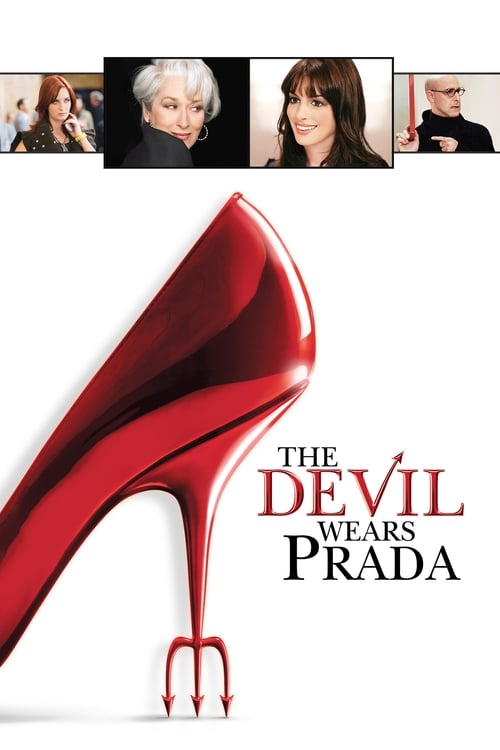
The hidden architecture of The Devil Wears Prada is six films, one TV show, and a Faust narrative buried under a makeover montage. None of it is about fashion.
The director who never raised his voice
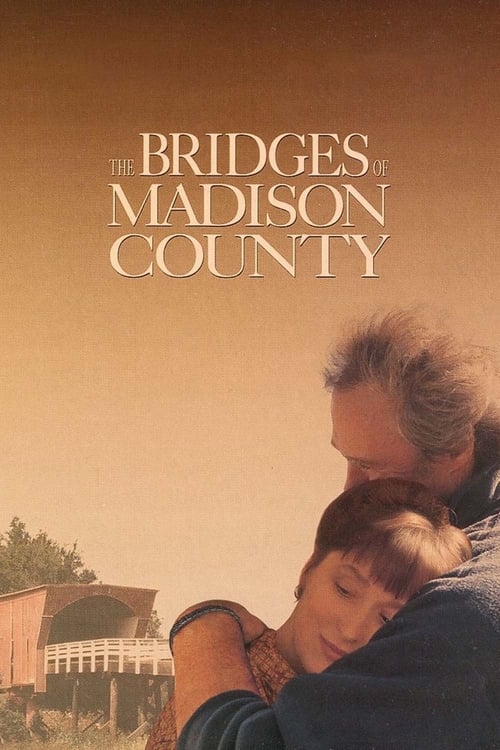
Streep made The Bridges of Madison County with Clint Eastwood in 1995. What she remembers is not directing notes or coverage choices but volume. “Clint would never raise his voice,” as she put it. “He would direct and people had to lean forward to hear what he was saying.” He’d shoot the rehearsal and move on. The crew stood on the balls of their feet, never sat down. Except Streep.
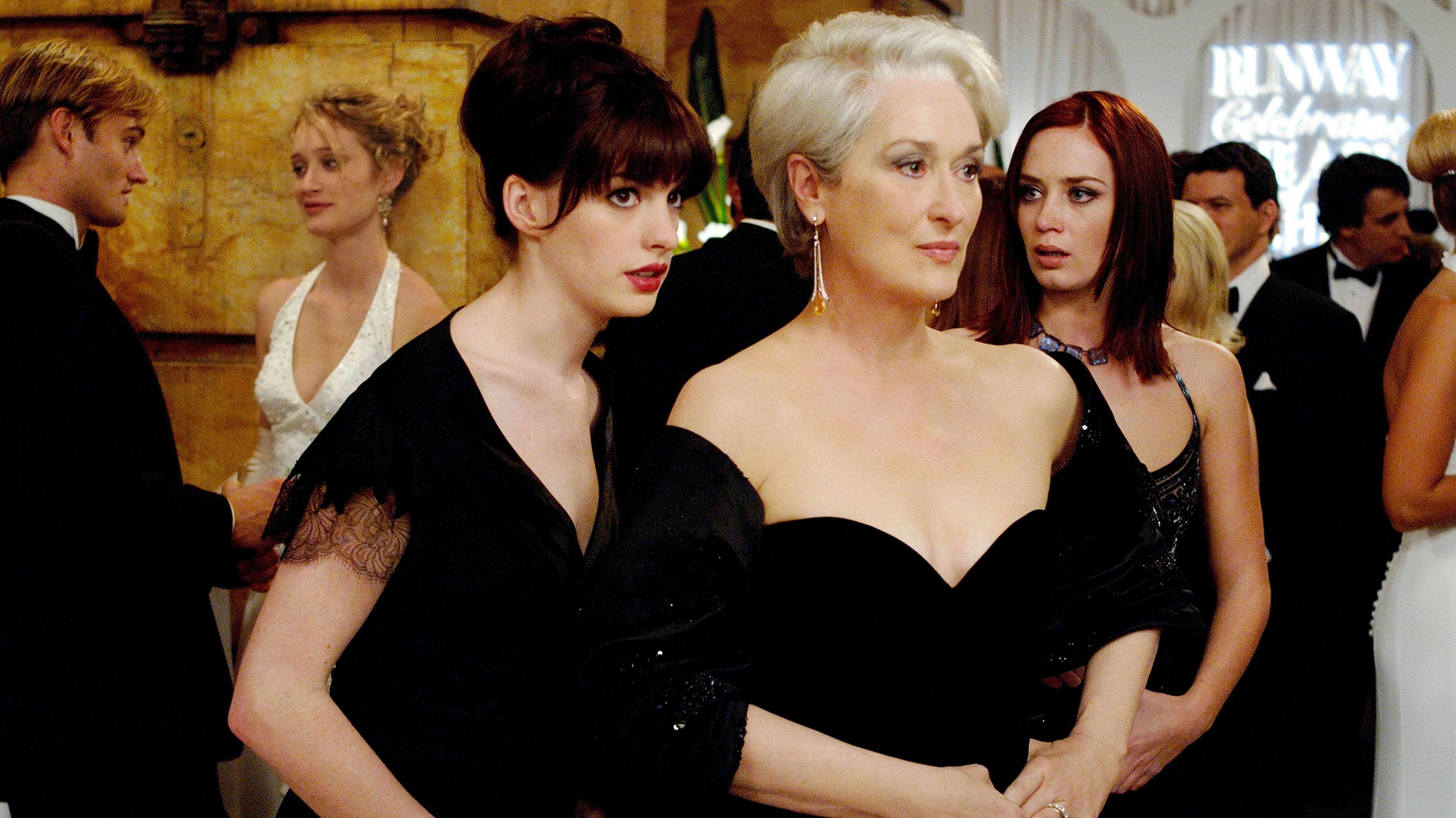
Watch any Runway office scene now and the geometry is Eastwood’s set. Miranda barely projects. She doesn’t have to. The room organizes itself toward the silent center. Andy and Emily are leaning forward in their chairs, in their phone calls, in their pre-dawn coffee runs. The reason that office works — the reason it has the gravity of a dictatorship instead of the volume of a comedy — is that Streep imported a 1995 Iowa farmhouse romance into a Manhattan fashion magazine.
Watch Eastwood and Streep alone in Francesca Johnson’s kitchen, the way the camera waits for the unsaid thing, and you’ll see where Miranda’s silence was born.
Mike Nichols smiling at his own cruelty
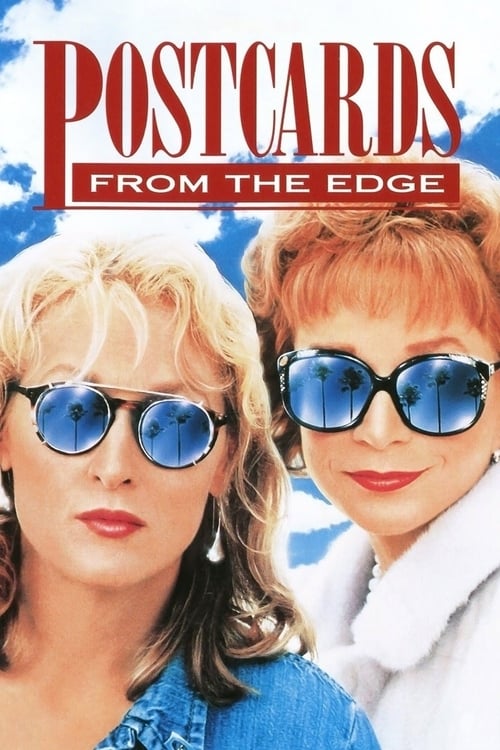
The other half of Miranda is Streep’s late friend Mike Nichols, with whom she’d made Silkwood, Heartburn, and Postcards from the Edge by the time Prada came around. From Nichols she took the comedy. “The command on the set,” as she put it. “Mike would do it sort of with a sly humor. People take it as mean, but it’s funny. I think it’s funny.”
This is the missing ingredient nobody talks about. Miranda knows her cruelty is funny. The slight smile after “Florals? For spring? Groundbreaking” — Streep delivered both words with a rising intonation, like they ended in question marks — is Nichols catching his own joke before anyone else does. She told Nichols later that she’d used him. He was thrilled.
The film to watch is Postcards from the Edge, where Nichols and Streep run an entire mother-daughter relationship on the same wavelength: cuts that bleed and land laughs in the same beat. Once you’ve seen Shirley MacLaine and Streep do it together, the office at Runway plays like a sequel.
The structure McKenna never hid
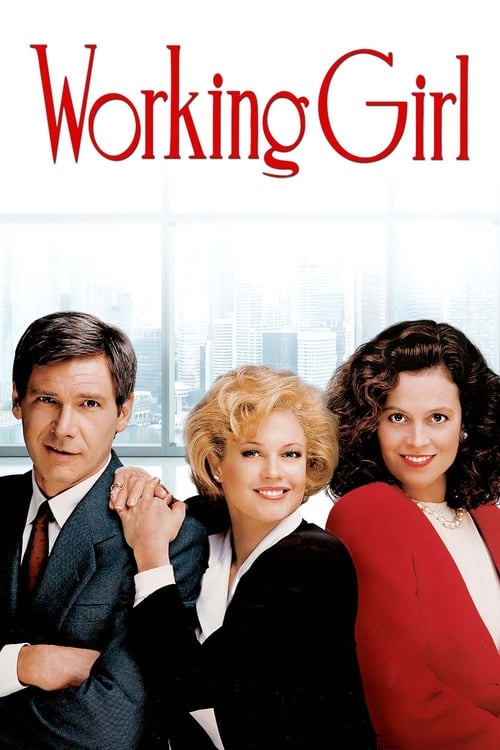
Aline Brosh McKenna was the fifth screenwriter hired on Prada. Four men had failed before her. When she was finally asked what she was actually building from, she named Working Girl without hesitation.
It’s a Mike Nichols recursion. The film already has Nichols inside it through Streep’s performance. It also has Nichols inside it through its bones: the New York workplace ascent, the corporate rivalry between two women, the protégée who threatens her boss because she’s secretly more competent. McKenna wasn’t quoting Working Girl; she was rebuilding it. The Tess McGill arc is Andy Sachs’ arc, with a fashion magazine where the corporate office used to be.
If you’ve never seen Melanie Griffith outsmart a Wall Street boardroom in 1988 — the big hair, the bigger cunning, the Carly Simon-scored Staten Island Ferry shots — do it before the sequel hits.
The film McKenna actually loves
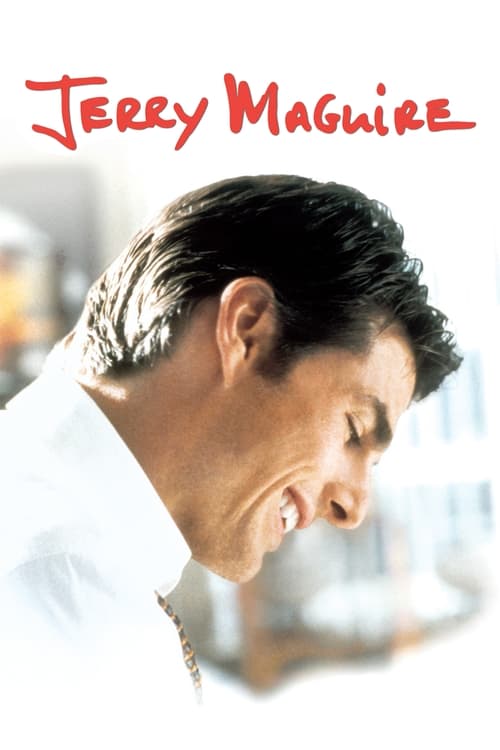
The other comp McKenna names is Jerry Maguire — “a favorite movie of mine,” as she put it. Cameron Crowe’s 1996 Tom Cruise vehicle has nothing to do with fashion or assistants or magazines. What it has is the thing McKenna later coined a term for: competence porn. Watching someone be incandescently good at their job, and watching that competence become the engine of their love story.
McKenna has insisted, repeatedly, that The Devil Wears Prada is not a romantic comedy. The real love story is between Andy and her own ability to do the impossible job. Once you’re looking for the Crowe template — the pre-dawn calls, the Rolodex math, the protagonist who falls in love with their own competence before they fall in love with anyone else — the Andy-Miranda relationship reads as a courtship between an apprentice and the only person who can see her gift.
Crowe’s film is also where you go to watch a young man scream “show me the money” without irony. Pair it with Prada. Different industries, same religion.
The lumpy blue sweater is Diane Keaton
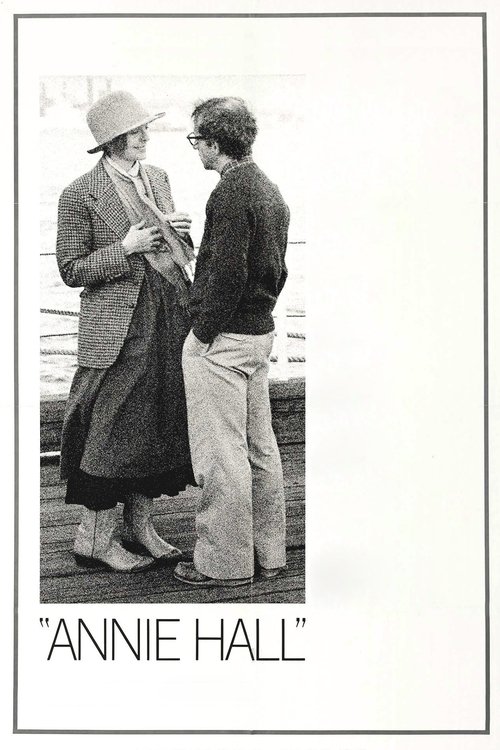
This one nobody has written about. Patricia Field, the costume designer who turned Sex and the City into a wardrobe, had a single deep reference for pre-makeover Andy. Her longtime collaborator Molly Rogers said it out loud: “Patricia’s initial deep inspiration for Andrea Sachs was Annie Hall. A men’s vest, a tie, a wide-leg pant and a hat. You know — Diane Keaton.”
Look at Andy’s first half hour now. The vests over button-downs. The masculine layering. The aggressive un-prettiness. That’s Keaton’s 1977 silhouette, which is the costume vocabulary of women who consciously dress against being looked at. The cerulean speech is Miranda dismantling exactly that stance — that lumpy blue sweater isn’t an opt-out, it’s a choice within a system you don’t understand. Field built the before-picture out of one of the most beloved women’s wardrobes in American film, then handed Andy over to Chanel.
The whole film is a costume essay on what Andy thinks she’s escaping versus what she actually joins. Annie Hall is the front cover.
The TV show in disguise
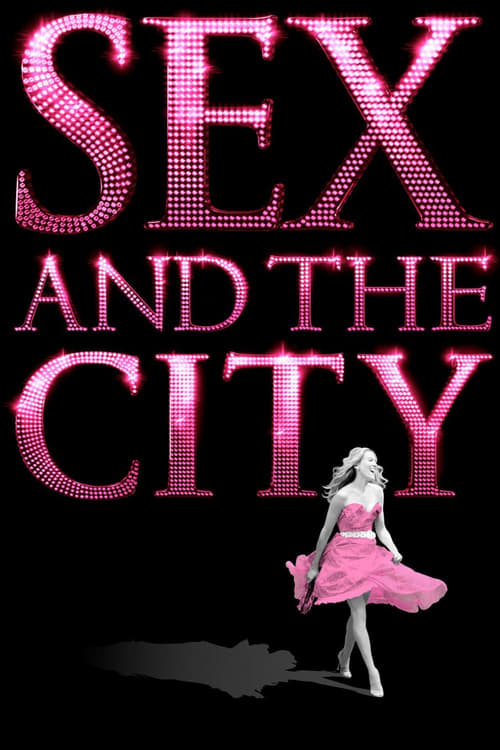
The Devil Wears Prada was David Frankel’s first major studio feature. It doesn’t look like one. The reason is simple and almost never stated: Frankel, cinematographer Florian Ballhaus, and Patricia Field had all just come off Sex and the City. Frankel had directed for the show himself. They came over as a unit because the fashion industry — terrified of Wintour’s reach — refused to talk to the production. McKenna couldn’t get a single Vogue staffer on the phone. So Frankel built the film with the only collaborators who’d already shown they understood how to film New York as a fashion ecosystem.
The handheld coverage in Miranda’s office, the makeover-montage grammar with passing cars masking the outfit changes, Field’s instinct to pull “very disparate elements” and put them together against expectation — that’s Carrie Bradshaw’s grammar, scaled up. The film’s confidence isn’t first-time-director confidence. It’s a TV team’s muscle memory.
Years of dressing Carrie Bradshaw is what it took to make Andy’s makeover work.
The Faust nobody noticed
McKenna keeps trying to tell people Andy’s boyfriend Nate is not a writing failure. He’s the Faust meter. “He’s there to remind her it’s a Faust story,” as she put it. The phone-in-the-fountain ending isn’t about quitting a bad boss. It’s Andy refusing the contract Mephistopheles has been holding out for the entire second act.
Read this way, the cerulean speech is the contract. Here’s how the system works. Here’s what you don’t yet understand. Here’s what’s on offer. And Streep’s last-minute edit at the table read — McKenna had originally written “everybody wants to be me”; Streep changed it to “everybody wants to be us” — locks the framing in place. Miranda isn’t speaking for herself. She’s speaking for the system she’s already signed for.
The film to chase this in is István Szabó’s Mephisto (1981) — Klaus Maria Brandauer as a stage actor in 1930s Germany who keeps choosing the next career rung over the next moral floor. Andy gets to throw the phone in the fountain. Brandauer’s character doesn’t.
What the map reveals
The pattern is hiding in plain sight. The Devil Wears Prada was made by people who refused to make it about fashion. Streep refused Anna Wintour and built a man. McKenna refused the chick-flick draft and built a Faust narrative. Patricia Field refused new costume vocabulary and built the before-picture out of Diane Keaton. Stanley Tucci refused the André Leon Talley audition and built Nigel from people he’d actually known.
Every iconic creative choice in the film is a refusal of the obvious source material in favor of something stranger and older. The reason it has aged like a classic studio comedy from 1988 is that it was, secretly, trying to be one.
If you’ve never seen Working Girl, start there. Same New York. Same Mike Nichols, who runs through The Devil Wears Prada twice — once in the camera, once in the pause before someone says something cruel and funny on the same exhale.